

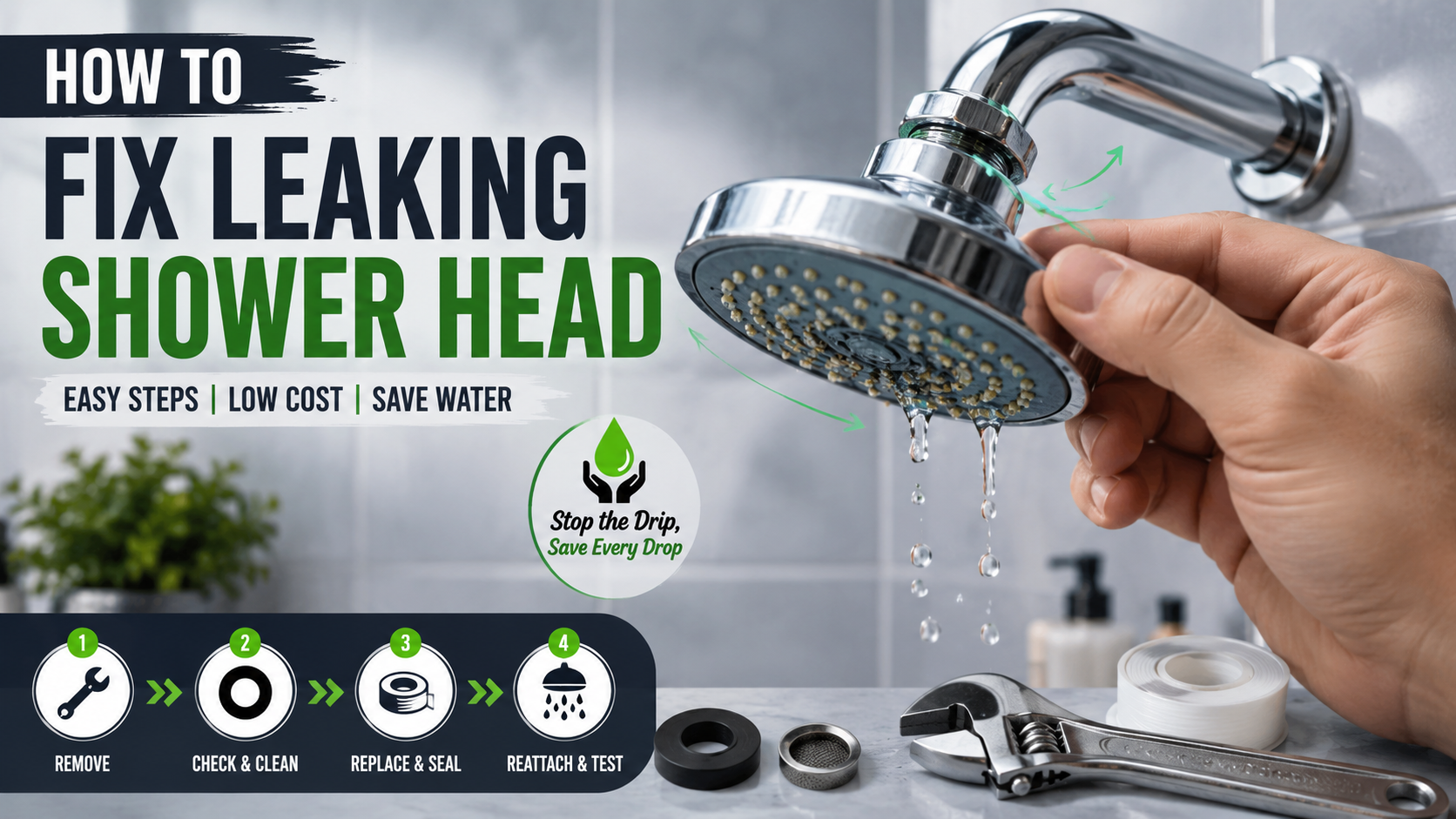
A leaking shower head might look like a small issue, but over time it becomes one of the most irritating and wasteful problems in any bathroom. That constant drip-drip sound at night, the rising water bill, and the messy mineral stains on tiles can slowly turn into a real headache.
The good news is that how to fix leaking shower head is usually not complicated. In most cases, it’s caused by simple problems like worn washers, loose fittings, mineral buildup, or damaged sealing tape. You don’t always need a plumber—just patience, basic tools, and the right method.
This guide is written to walk you through everything in detail, step by step, so you can confidently understand how to fix leaking shower head and actually solve it at home without confusion.
Understanding the Problem Before You Fix It
Before jumping into repairs, it’s important to understand what’s really happening. A leaking shower head is not always a “broken” shower head. It’s often a sealing problem.
Water is forced through pipes under pressure, and even a tiny gap in the connection can cause a continuous drip. That’s why learning how to fix leaking shower head starts with identifying the exact cause.
As one experienced plumber once said, “Water always finds the smallest mistake in sealing.”
Why Shower Heads Start Leaking
There are a few common reasons behind leaks, and knowing them helps you choose the correct fix.
Most homeowners dealing with how to fix leaking shower head usually face one of these issues:
- Worn-out rubber washer
- Loose pipe connection
- Mineral deposits from hard water
- Damaged Teflon (plumber’s) tape
- Cracked or old shower head
Each of these problems behaves differently, so fixing blindly doesn’t always work.
The Role of Water Pressure
High water pressure can silently damage your shower system.
When pressure is too strong, it pushes water through weak points in sealing. Over time, even a good installation can start dripping.
If you’re repeatedly searching how to fix leaking shower head, water pressure might be an overlooked reason.
Tools and Materials You Will Need
Before starting, gather everything so you don’t stop halfway through the process.
One important rule in how to fix leaking shower head is preparation.
Basic Tools:
- Adjustable wrench or pliers
- Soft cloth or towel
- Small brush (old toothbrush works fine)
- Bucket or bowl
Repair Materials:
- White vinegar
- Plumber’s Teflon tape
- Replacement rubber washer
- Mild cleaning soap
Having these ready makes the process smooth and stress-free.
Step-by-Step Guide: How to Fix Leaking Shower Head
Now let’s go into the full practical method of how to fix leaking shower head. Follow each step carefully for the best results.
Step 1: Turn Off Water Supply
Start by turning off the water supply to avoid unwanted spraying.
Even though the repair seems small, water pressure can surprise you.
This simple step is the foundation of safely learning how to fix leaking shower head.
Place a towel or cloth in the sink or bathtub area to avoid slipping.
Step 2: Remove the Shower Head Carefully
Hold the shower head and gently twist it counter-clockwise.
If it is tight, wrap a cloth around it and use a wrench for extra grip.
Avoid using too much force because metal threads can get damaged easily.
Once removed, you will see the connection point where most leaks originate.
Step 3: Inspect Everything Closely
This is where most people rush—but don’t.
Look carefully inside the shower head and pipe connection.
Check for:
- Rubber washer condition
- Dirt or rust
- Cracks in metal threads
- White mineral deposits
This inspection step is extremely important in how to fix leaking shower head, because the solution depends on what you find.
Step 4: Clean Mineral Buildup Thoroughly
Hard water leaves behind calcium and lime deposits that block proper sealing.
Soak the shower head in white vinegar for 30–60 minutes.
After soaking, scrub it gently using a toothbrush.
You’ll often see small white flakes coming off—that’s the buildup.
Cleaning properly is a major step in how to fix leaking shower head because even a clean seal works better than a tight one.
Step 5: Replace the Rubber Washer
The rubber washer is one of the most important parts of the connection.
If it looks:
- Flat
- Cracked
- Hardened
Replace it immediately.
This tiny part often solves 50% of all how to fix leaking shower head cases.
A new washer creates a tight water seal and prevents slow dripping.
Step 6: Apply Fresh Teflon Tape
Teflon tape (plumber’s tape) helps seal the threads between the pipe and shower head.
Wrap it neatly around the threads 2–3 times.
Make sure it is smooth and not messy or overlapping too thickly.
This step is critical in how to fix leaking shower head, especially if the leak is from the joint.
As plumbers often say, “Good tape work is silent plumbing success.”
Step 7: Reinstall the Shower Head
Now carefully screw the shower head back onto the pipe.
First tighten it by hand, then slightly adjust with a wrench if needed.
Do not over-tighten, as it may damage threads or crack fittings.
This step completes the physical repair in how to fix leaking shower head.
Step 8: Test the Leak
Turn the water supply back on slowly.
Watch closely for dripping around:
- Connection point
- Shower head face
- Pipe joint
If everything is done correctly, the leak should stop immediately.
Testing is the final confirmation step in how to fix leaking shower head.
Advanced Fixes if the Leak Continues
Sometimes basic fixes don’t solve the issue. In that case, deeper problems may be involved.
Replace the Entire Shower Head
If the shower head is old, rusted, or internally damaged, replacement is often better than repair.
Modern shower heads are affordable and more efficient.
In many how to fix leaking shower head cases, replacement is actually the fastest solution.
Check for Pipe Thread Damage
If pipe threads are worn or broken, sealing will not hold properly.
You may need a plumber to repair or replace the pipe fitting.
This is rare but important in advanced how to fix leaking shower head situations.
Inspect Water Pressure Regulator
If your home has high water pressure, it can continuously stress fittings.
Installing a pressure regulator helps control flow and prevent leaks.
Ignoring this can make how to fix leaking shower head solutions temporary only.
Common Mistakes People Make
Many people accidentally make the problem worse while trying to fix it.
Avoid these mistakes:
- Using too much Teflon tape
- Over-tightening fittings
- Skipping cleaning steps
- Ignoring washer condition
- Not testing after repair
A simple rule in how to fix leaking shower head is: “Fix gently, not aggressively.”
Prevention Tips to Avoid Future Leaks
Once you’ve learned how to fix leaking shower head, the next step is preventing it from happening again.
Clean Regularly
Soak your shower head in vinegar every 2–3 months.
This prevents mineral buildup from returning.
Check Washers Yearly
Rubber washers wear out naturally.
Replacing them early avoids unexpected leaks.
Avoid Excess Force
Do not over-tighten when reinstalling.
Hand-tight plus slight adjustment is enough.
Use Quality Materials
Cheap washers and tapes wear out quickly.
Good quality materials last longer and perform better.
Real-Life Example (Practical Understanding)
A homeowner noticed a small drip every night from their bathroom shower.
At first, they ignored it. After a few weeks, they saw water stains and a higher water bill.
They followed how to fix leaking shower head steps: cleaned the head, replaced the washer, and rewrapped the threads.
The leak stopped completely in less than 30 minutes.
This shows how small issues can turn into costly problems if ignored.
When You Should Call a Plumber
Even though how to fix leaking shower head is usually DIY-friendly, some situations require expert help.
Call a plumber if:
- Leak is coming from inside the wall
- Pipe is cracked or broken
- Water pressure is abnormal
- Repair attempts fail repeatedly
There’s no harm in getting professional help when needed.
Final Thoughts
Learning how to fix leaking shower head is one of the simplest yet most useful home repair skills. Most leaks are caused by small issues that can be fixed with basic tools and a careful approach.
Once you understand the cause and follow the correct steps, the problem usually disappears within minutes.
A small effort today can save water, money, and long-term frustration tomorrow.
As a simple truth often repeated in plumbing: “Every drop you fix today saves gallons tomorrow.”
Also Read: Flasher Magazine