

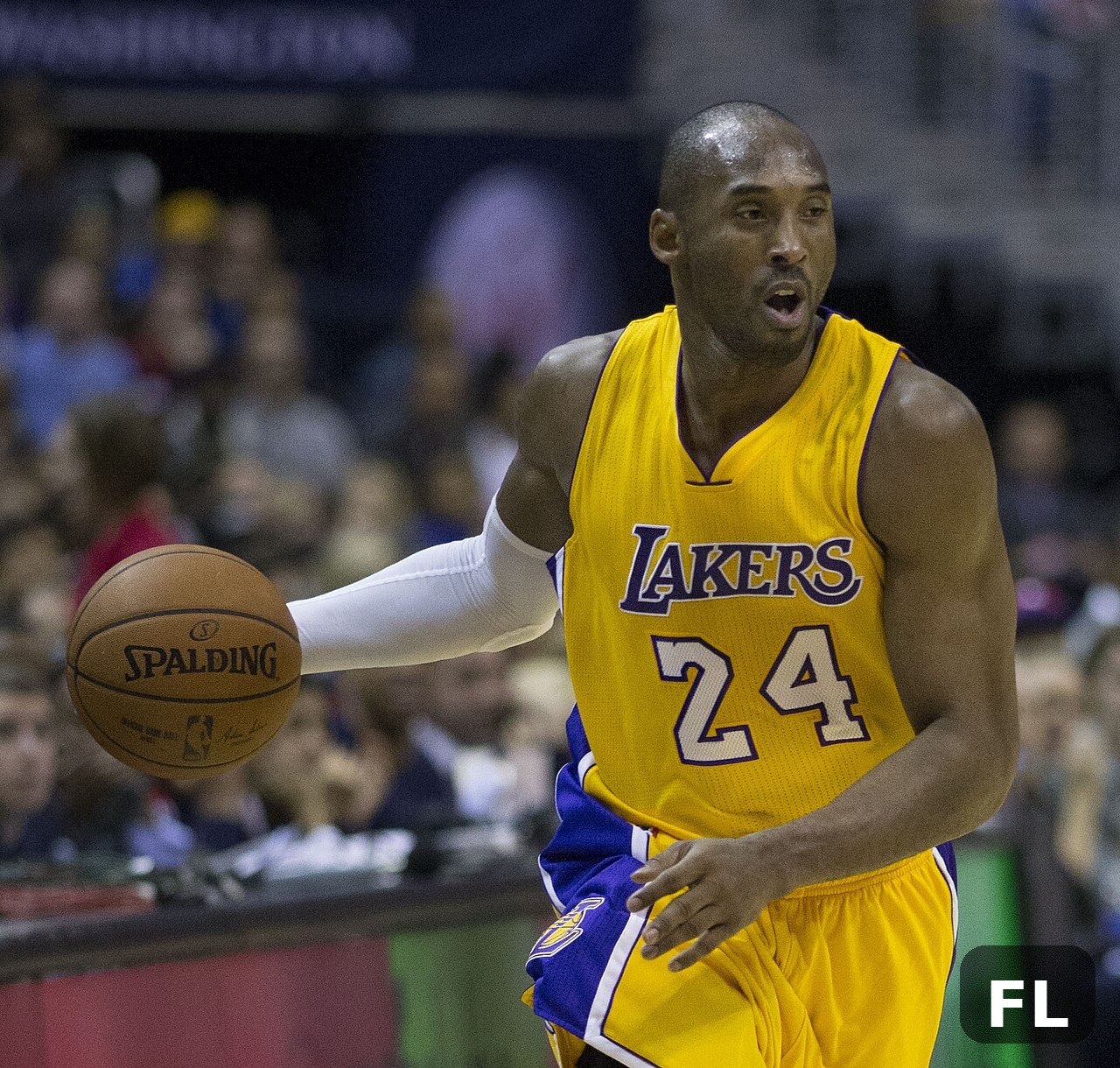
One made his money in front of 18,000 screaming fans a night. The other made his in empty office blocks nobody else wanted, preferably during a recession. Kobe Bryant and Sam Zell never met on any court or in any boardroom — yet they are natural men to compare, because both spent their second acts proving that the famous part of their lives was only the first fortune.
Both men are gone now: Bryant died in a helicopter crash in January 2020 at just 41, and Zell died in May 2023 at 81. What remains are two estates, two playbooks and a wealth gap of nearly nine to one — a gap that says less about talent than about the difference between being the star and owning the building the star plays in.
Here is the honest comparison: their beginnings, the careers that made them famous, the investments that made them rich, and what each fortune was worth at the end, drawn from Forbes and widely reported figures. More wealth-and-legacy features are waiting at Flasher Magazine.
Quick Facts
| Detail | Kobe Bryant | Sam Zell |
| Full Name | Kobe Bean Bryant | Sam Zell |
| Born | 23 August 1978, Philadelphia, USA | 1941, to Polish parents who fled to the US |
| Died | 26 January 2020, aged 41 | 18 May 2023, aged 81 |
| Known For | Los Angeles Lakers legend; five-time NBA champion | Real-estate billionaire; founder of Equity Group Investments |
| Field | Professional basketball, then investing and media | Real estate and distressed-asset investing |
| Net Worth at Death | About $600 million (Forbes) | About $5.2 billion (Forbes) |
| Signature Move | $6 million BodyArmor stake that became roughly $400 million for his estate | $39 billion sale of Equity Office Properties to Blackstone in 2007 |
| Legacy Vehicle | Estate managed by his widow, Vanessa Bryant | Equity Group Investments and public REITs he chaired |
Who Was Kobe Bryant?
Kobe Bean Bryant was born on 23 August 1978 in Philadelphia. His father, former NBA player Joe “Jellybean” Bryant, named him after the Kobe beef he had seen on a restaurant menu. When Kobe was six, the family moved to Italy for Joe’s playing career, and the boy grew up fluent in Italian, studying NBA tapes his grandfather mailed across the Atlantic.
Back in Pennsylvania, he starred at Lower Merion High School, led the school to its first state championship in 53 years, and skipped college entirely. Drafted 13th overall by Charlotte in 1996 and traded straight to the Los Angeles Lakers, he played all 20 of his NBA seasons in purple and gold.
The record is familiar because it is extraordinary: five NBA championships (2000–2002, 2009, 2010), the 2008 MVP award, two Finals MVP awards, 18 All-Star selections, two Olympic gold medals, 33,643 career points — and, on 22 January 2006, an 81-point game that remains the second-highest scoring night in league history. He retired in April 2016 by scoring 60 points in his final game, because of course he did.
Who Was Sam Zell?
Sam Zell was born in 1941 to Polish parents who had escaped to the United States during the German invasion of Poland. He got his start as an undergraduate at the University of Michigan, managing student housing apartments — reportedly making money from other students’ rent before he had a degree.
In 1968 he founded the firm that became Equity Group Investments, the private investment vehicle he ran for more than half a century. Zell’s gift was timing distress: he bought property when owners were desperate and prices were absurd, a habit that earned him the nickname “the Grave Dancer.”
In the 1990s he helped popularise the modern real estate investment trust, taking the precursor to Equity Residential public in 1993 and building Equity Office Properties into the first REIT included in the S&P 500. Beyond property he invested in manufacturing, travel, retail, healthcare and energy — almost always where other buyers saw only trouble.
How Kobe Bryant Built His Fortune
Bryant’s playing earnings were a record for a team-sport athlete of his era. Forbes put his combined salary and endorsement income at $680 million across his career, including more than $320 million in Lakers salary alone. Nike, which signed him in 2003, built one of basketball’s defining shoe lines around him, and at his peak he earned around $30 million a year from endorsements.
The clever part came late. In March 2014, Bryant invested about $6 million for roughly a 10 per cent stake in BodyArmor, an upstart sports-drink company taking on Gatorade. He did not just endorse it — he sat on its board and wrote and co-directed its advertising. In 2016 he launched the $100 million venture fund Bryant Stibel with entrepreneur Jeff Stibel, and his Granity Studios won the 2018 Academy Award for the animated short Dear Basketball.
Forbes estimated Bryant’s net worth at $600 million when he died on 26 January 2020, in the Calabasas helicopter crash that also killed his 13-year-old daughter Gianna and seven others. The BodyArmor bet landed after his death: when Coca-Cola bought full control of the brand for $5.6 billion in November 2021, Bryant’s stake was worth roughly $400 million to his estate — one of the most successful athlete investments ever recorded, and one he never lived to collect.
How Sam Zell Built His Fortune
Zell’s masterpiece was a sale, not a purchase. In 2007, at the very top of the property bubble, he sold Equity Office Properties to Blackstone for $39 billion — still one of the largest real-estate deals in history. Months later the financial crisis began. The timing was so precise it became legend.
His most famous failure came immediately afterwards. Also in 2007, Zell took media giant Tribune Company private in an $8.2 billion leveraged deal. Loaded with debt just as newspaper advertising collapsed, Tribune filed for bankruptcy protection a year later. Zell himself called it the “deal from hell” — a rare, blunt admission from a man whose 2017 memoir was titled Am I Being Too Subtle?
The fortune survived the failure comfortably. Forbes put Zell’s net worth at $5.2 billion at his death, built on apartment and office empires, listed REITs he chaired, and decades of buying assets at grave-dancer prices. Away from the office he was famous for his annual rides with “Zell’s Angels,” his motorcycle group — a billionaire who preferred leather to limousines.
The Comparison: The Star Versus the Owner
Start with the arithmetic. At death, Zell’s roughly $5.2 billion was about eight to nine times Bryant’s roughly $600 million. The reason is structural, not personal: Zell owned equity in thousands of buildings and charged the world rent for fifty years, while Bryant — for all his records — was an employee for his first twenty, however spectacularly paid. Ownership compounds; salaries, even $25-million-a-year salaries, end.
The styles rhyme more than the numbers do. Both men were contrarians who trusted their own research over the crowd’s mood: Zell bought offices in downturns when banks were foreclosing, and Bryant bought into a drinks startup when the safe money was in a simple endorsement cheque. Both were relentless workers, blunt talkers, and utterly uninterested in consensus.
And both stories carry a warning next to the inspiration. Zell’s Tribune deal shows that even the greatest timer in real estate can be destroyed by leverage and a dying industry. Bryant’s story shows the opposite risk — a fortune still in its compounding phase, cut off at 41 just as the investor behind it was hitting his stride. His estate, guided by Vanessa Bryant, has kept the Nike line, Granity and the investments alive; analysts who watched the BodyArmor payout widely believe a living Kobe was on a credible path toward billionaire status.
Their Legacies in 2026
Zell died on 18 May 2023, aged 81, from complications of a recent illness, and was mourned across Chicago business life as the city’s defining property mind. Equity Group Investments and the listed companies he chaired continue under successors, and his distressed-asset playbook remains required reading for real-estate students.
Bryant’s legacy runs on two tracks. The basketball one is sealed: Hall of Fame induction, both of his jersey numbers retired by the Lakers, and statues outside their arena. The business one is still being written by his estate — and the $400 million BodyArmor outcome ensures it will be studied by athletes long after his highlights fade.
Bottom Line
Kobe Bryant and Sam Zell are a matched pair of American accumulators separated by one crucial variable: ownership. Bryant turned $680 million of career earnings and one inspired $6 million bet into a $600 million fortune, and he was just getting started as an investor when his life ended. Zell turned student-apartment management into a $5.2 billion empire by owning the assets everyone else performed in, rented, or walked past — and by selling the biggest one at the perfect moment. The star earned more fame in a night than the owner earned in a lifetime. The owner earned more money in a single sale than most stars earn in a career. Both lessons are the same lesson, really: equity is where wealth lives.
Frequently Asked Questions
Who was richer, Kobe Bryant or Sam Zell?
Sam Zell, by a wide margin. Forbes estimated Zell’s net worth at about $5.2 billion when he died in May 2023, compared with about $600 million for Kobe Bryant at his death in January 2020 — a gap of roughly eight to nine times, explained mainly by Zell’s fifty years of property ownership.
What was Kobe Bryant’s net worth when he died?
Forbes estimated Bryant’s net worth at $600 million at the time of his death on 26 January 2020. His career earnings from salary and endorsements totalled about $680 million, and his estate later received roughly $400 million from the sale of BodyArmor to Coca-Cola in 2021.
How did Sam Zell make his money?
Zell founded Equity Group Investments in 1968 and built his fortune buying distressed real estate cheaply — the strategy behind his “Grave Dancer” nickname. He helped popularise the modern REIT in the 1990s and crowned his career by selling Equity Office Properties to Blackstone for $39 billion in 2007, just before the financial crisis.
What was Kobe Bryant’s BodyArmor deal?
In March 2014 Bryant invested about $6 million for roughly a 10 per cent stake in sports-drink maker BodyArmor, joining its board and fronting its campaigns. When Coca-Cola bought the company outright for $5.6 billion in November 2021, that stake was worth approximately $400 million to his estate.
What was Sam Zell’s biggest failure?
The 2007 leveraged buyout of Tribune Company. The $8.2 billion deal loaded the newspaper group with debt months before the financial crisis and an advertising collapse; Tribune filed for bankruptcy protection in 2008. Zell later called it his “deal from hell,” though his wider fortune — billions across property and listed REITs — absorbed the loss.
When did Kobe Bryant and Sam Zell die?
Kobe Bryant died on 26 January 2020, aged 41, in a helicopter crash in Calabasas, California, that also killed his daughter Gianna and seven others. Sam Zell died on 18 May 2023, aged 81, due to complications from a recent illness, according to Equity Group Investments.