

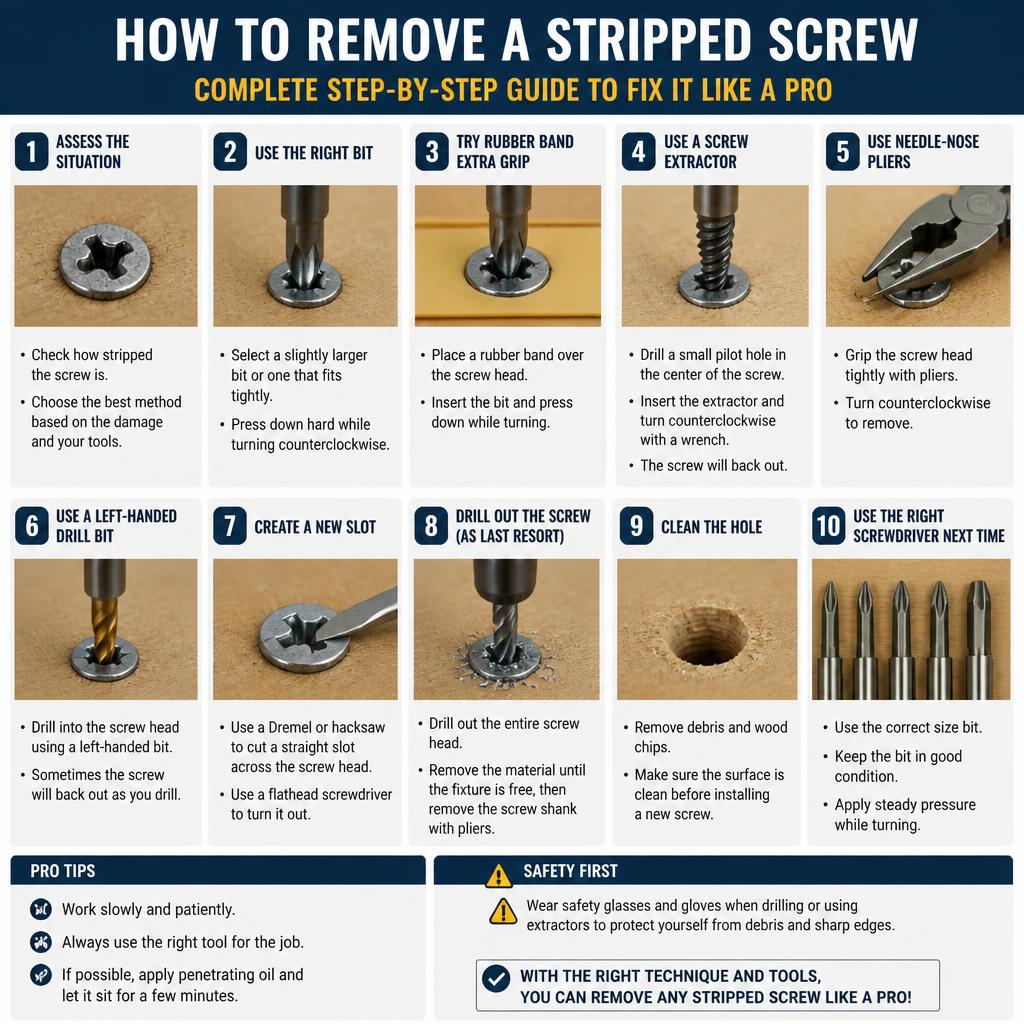
Stripped screws are one of those small problems that quickly turn into big frustration. You try to loosen a screw, but the head is worn out and the screwdriver keeps slipping. It feels like the screw is “stuck forever,” even though it should be simple.
This guide on how to remove a stripped screw will walk you through practical, real-world methods that actually work. Whether you’re fixing furniture, electronics, or home hardware, these techniques will help you get the job done without damaging your material.
What Is a Stripped Screw and Why It Happens
A stripped screw is a screw whose head grooves are damaged, making it impossible for a screwdriver to grip properly. When this happens, turning it becomes nearly impossible.
Understanding how to remove a stripped screw starts with knowing why it happens in the first place.
Common causes include:
- Using the wrong size screwdriver
- Applying too much force too quickly
- Low-quality or soft metal screws
- Rust or corrosion over time
- Repeated tightening and loosening
A simple mistake like using a slightly loose screwdriver can ruin the head. As one carpenter once said, “Most stripped screws aren’t stubborn—they’re just misunderstood.”
Essential Tools You May Need
Before learning how to remove a stripped screw, it’s important to gather the right tools. Having the correct equipment increases your chances of success and prevents damage.
Here are the most useful tools:
- Rubber band or elastic strip
- Flathead screwdriver
- Pliers or locking pliers
- Screw extractor kit
- Drill machine with metal bit
- Hammer
- WD-40 or lubricant
- Rotary tool (like Dremel)
You don’t always need all of them. Often, one or two simple tools are enough depending on the severity of the damage.
Method 1: Rubber Band Trick (Quick and Easy Fix)
One of the simplest methods for how to remove a stripped screw is the rubber band trick. It works surprisingly well for mildly stripped screws.
Steps:
- Place a wide rubber band over the screw head
- Press the screwdriver firmly into the rubber band
- Turn slowly with steady pressure
The rubber band fills the gaps and creates extra grip.
This method works best when the screw is not completely destroyed. It’s often used in home repairs because it requires no special tools.
A DIY enthusiast once said, “A rubber band has saved me more times than my toolbox ever did.”
Method 2: Use a Flathead Screwdriver
If the screw is a Phillips type and slightly stripped, switching tools can help.
Steps for how to remove a stripped screw using this method:
- Choose a flathead screwdriver slightly wider than the screw head
- Place it firmly into the damaged grooves
- Apply strong downward pressure
- Turn slowly and steadily
This works because the flathead can sometimes catch on the remaining edges of the screw.
Tip: Combine this with a rubber band for better grip if needed.
Method 3: Use Pliers for Exposed Screws
If the screw head is slightly raised or exposed, pliers can be very effective.
Steps:
- Grip the screw head tightly using locking pliers
- Turn counterclockwise slowly
- Maintain steady pressure to avoid slipping
This is one of the most direct solutions for how to remove a stripped screw, especially in wood or soft materials.
It works best when:
- The screw is partially out
- The head is not fully flush with the surface
A common saying among repair technicians is, “If you can grab it, you can remove it.”
Method 4: Screw Extractor Kit (Professional Solution)
For heavily damaged screws, a screw extractor is the most reliable option.
Steps:
- Drill a small pilot hole into the screw head
- Insert the extractor bit
- Turn counterclockwise slowly
The extractor grips the inside of the screw and removes it cleanly.
This method is widely recommended for how to remove a stripped screw when other methods fail.
Advantages:
- Works on severely damaged screws
- High success rate
- Minimal damage to surrounding material
Disadvantage:
- Requires a drill and extractor kit
Method 5: Drill It Out Completely
When nothing else works, drilling is the final solution.
Steps:
- Use a metal drill bit slightly smaller than the screw head
- Drill straight into the center
- Continue until the head detaches
- Remove the remaining screw shaft with pliers
This is a powerful method for how to remove a stripped screw, but it should be used carefully.
Important tips:
- Drill slowly to avoid damage
- Keep the drill straight
- Use light pressure first
Think of it as the “last resort rescue mission” for stuck screws.
Method 6: Apply Lubrication for Rusty Screws
Sometimes the problem isn’t just stripping—it’s rust.
Steps:
- Spray WD-40 or similar lubricant
- Wait 10–15 minutes
- Try removing with screwdriver or pliers
This helps loosen corrosion and makes how to remove a stripped screw much easier.
Lubrication is especially useful for outdoor furniture, bathroom fittings, or old machinery.
As mechanics often say, “Rust doesn’t resist force, it resists patience.”
Method 7: Use a Rotary Tool (Dremel Method)
A rotary tool can create a new groove in the screw head.
Steps:
- Carefully cut a straight slot into the screw head
- Use a flathead screwdriver
- Turn slowly to remove it
This method is effective for how to remove a stripped screw when precision tools are available.
It essentially “resets” the screw head so a screwdriver can grip again.
Method 8: Hammer and Screwdriver Technique
This old-school trick can sometimes save the day.
Steps:
- Place a flathead screwdriver on the screw
- Tap lightly with a hammer
- Then try turning slowly
The impact helps the screwdriver grip deeper into the damaged head.
This is a simple but underrated method for how to remove a stripped screw in household repairs.
Common Mistakes to Avoid
When trying how to remove a stripped screw, many people make things worse without realizing it.
Avoid these mistakes:
- Using too much force too quickly
- Using the wrong screwdriver size
- Skipping lubrication on rusted screws
- Drilling without proper alignment
- Giving up too early
A repair expert once said, “Stripped screws don’t win by strength—they win by impatience.”
How to Prevent Stripped Screws in the Future
Knowing how to remove a stripped screw is useful, but preventing it is even better.
Here’s how you can avoid the problem:
- Always use the correct screwdriver size
- Apply steady, controlled pressure
- Avoid over-tightening screws
- Use high-quality screws when possible
- Keep screw heads clean before use
Small habits make a big difference in long-term repairs.
Real-Life Example: A Simple Furniture Fix
Imagine assembling a chair and one screw becomes stripped halfway through. Instead of forcing it, you pause and try the rubber band method.
If that fails, you switch to pliers or a screw extractor. Within minutes, the problem is solved without damaging the wood.
This is exactly why learning how to remove a stripped screw saves both time and frustration in everyday life.
Final Thoughts
Stripped screws can feel like a small disaster during any repair project. But with the right approach, they are completely manageable.
From rubber bands to drill extraction, each method for how to remove a stripped screw has its place depending on the situation.
The key is to stay patient, choose the right tool, and avoid forcing the screw further into damage. Most importantly, once you understand how to remove a stripped screw, you’ll never feel stuck again when it happens in real life.