

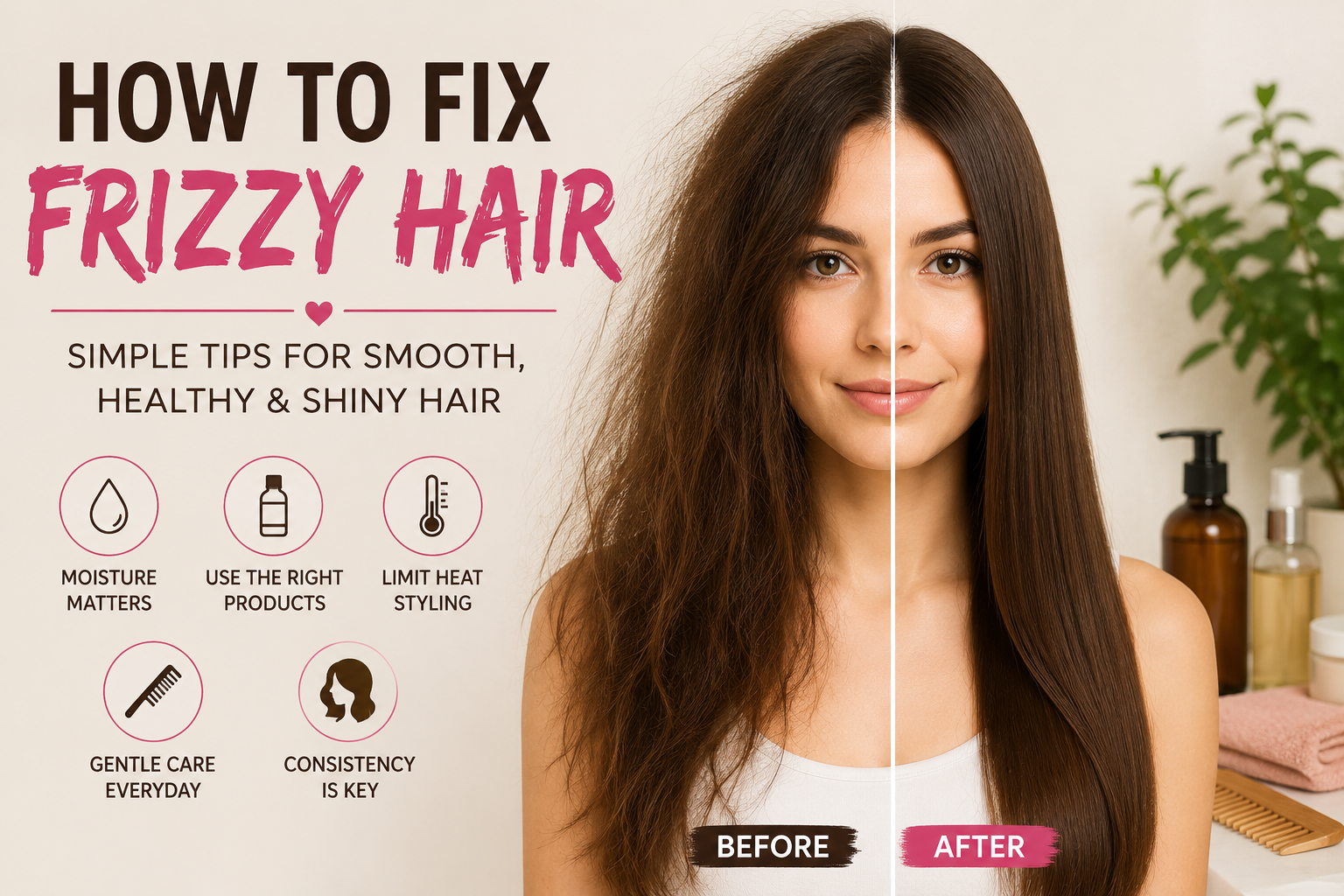
Frizzy hair can turn a good hair day into a frustrating one. Whether your hair becomes puffy after washing, reacts badly to humidity, or always seems difficult to manage, understanding how to fix frizzy hair can make a huge difference.
The good news is that frizz is usually a sign that your hair needs more moisture, protection, or the right care routine. Once you know the causes and solutions, smoother hair becomes much easier to achieve.
What Causes Frizzy Hair?
Before learning how to fix frizzy hair, it helps to understand why it happens.
Frizz occurs when the outer layer of your hair, called the cuticle, lifts instead of lying flat. This allows moisture from the air to enter the hair shaft, causing strands to swell and become unruly.
Common causes include:
- Dry or dehydrated hair
- Humid weather
- Excessive heat styling
- Harsh shampoos
- Chemical treatments
- Overwashing
- Rough towel drying
- Lack of conditioning
As hairstylists often say, “Frizz isn’t the problem—it’s usually a symptom of hair asking for moisture.”
Why Moisture Is the Key to Fixing Frizz
One of the most effective answers to how to fix frizzy hair is increasing moisture.
Dry hair constantly searches for moisture from the environment. When humidity is present, the hair absorbs water from the air and becomes frizzy.
Adding moisture through conditioners, masks, and leave-in treatments helps seal the cuticle and keeps hair smoother for longer.
Think of hair like a dry sponge. A dry sponge quickly absorbs water, while a saturated sponge does not. Hair behaves similarly.
Choose a Sulfate-Free Shampoo
Many shampoos contain strong cleansing agents that strip away natural oils.
If you’re searching for how to fix frizzy hair, switching to a sulfate-free shampoo can be one of the easiest improvements.
Look for shampoos containing:
- Argan oil
- Coconut oil
- Shea butter
- Aloe vera
- Glycerin
These ingredients cleanse gently while helping maintain moisture balance.
Avoid washing your hair excessively, especially if your hair is naturally curly or dry.
Never Skip Conditioner
Conditioner is essential when learning how to fix frizzy hair.
A quality conditioner smooths the hair cuticle and helps lock in moisture after washing.
For best results:
- Apply from mid-lengths to ends
- Leave it on for 2–5 minutes
- Use cool water when rinsing
- Choose products designed for dry or frizzy hair
Consistent conditioning can dramatically reduce frizz within a few weeks.
Use a Deep Conditioning Mask Weekly
Weekly hair masks provide intensive hydration.
If regular conditioner is daily maintenance, a hair mask is like a deep repair treatment.
Popular moisturizing ingredients include:
- Avocado oil
- Argan oil
- Keratin
- Shea butter
- Coconut oil
Applying a mask once or twice per week can strengthen hair and improve smoothness over time.
Stop Using Hot Water
Many people unknowingly worsen frizz by washing hair with very hot water.
Hot water lifts the hair cuticle, making it easier for moisture to escape.
One of the simplest ways to learn how to fix frizzy hair is to switch to lukewarm water and finish with a cool rinse.
The cool rinse helps flatten the cuticle and adds natural shine.
Dry Your Hair the Right Way
The way you dry your hair matters more than most people realize.
Traditional towels create friction that roughens the hair cuticle and increases frizz.
Instead:
- Use a microfiber towel
- Try a cotton T-shirt
- Gently squeeze excess water
- Avoid aggressive rubbing
Small changes in drying habits often produce noticeable improvements.
Apply a Leave-In Conditioner
Leave-in conditioners act as a protective layer throughout the day.
They provide ongoing hydration while helping shield hair from humidity and environmental stress.
When considering how to fix frizzy hair, leave-in products are among the most effective daily solutions.
Benefits include:
- Better moisture retention
- Easier detangling
- Reduced breakage
- Smoother texture
- Added shine
Use only a small amount to avoid weighing down your hair.
Limit Heat Styling
Frequent use of flat irons, curling wands, and blow dryers can damage the hair cuticle.
Damaged cuticles struggle to stay smooth, leading to constant frizz.
To reduce heat damage:
- Lower styling temperatures
- Use heat protectant sprays
- Air-dry when possible
- Limit heat styling sessions
A good rule is simple: “The less heat your hair needs, the healthier it usually becomes.”
Protect Hair from Humidity
Humidity is one of the biggest triggers of frizz.
Even healthy hair can become puffy in humid conditions.
To protect against moisture in the air:
- Use anti-humidity sprays
- Apply lightweight serums
- Wear protective hairstyles
- Avoid touching hair frequently
These habits create a barrier that helps maintain smoother strands.
Hair Oils Can Help Control Frizz
Hair oils are popular because they smooth the cuticle and lock in moisture.
Effective options include:
- Argan oil
- Jojoba oil
- Coconut oil
- Marula oil
- Almond oil
When exploring how to fix frizzy hair, a few drops of oil applied to the ends can instantly improve appearance.
Remember that a small amount goes a long way.
Get Regular Trims
Split ends contribute significantly to frizz.
Damaged ends become rough, tangled, and difficult to control.
Professional stylists often recommend trimming hair every 6–10 weeks depending on hair type and condition.
Regular trims:
- Remove damaged ends
- Improve appearance
- Reduce tangles
- Make styling easier
Healthy ends create a smoother overall look.
Sleep on a Silk Pillowcase
Your nighttime routine can affect hair health.
Cotton pillowcases create friction while you sleep, leading to tangles and frizz.
Silk or satin pillowcases allow hair to glide more smoothly.
Benefits include:
- Less breakage
- Reduced frizz
- Better moisture retention
- Easier morning styling
Many people notice improvements within just a few nights.
Avoid Over-Brushing
Brushing too much can separate hair strands and create unwanted volume.
This is especially true for curly and wavy hair types.
For best results:
- Use a wide-tooth comb
- Detangle when hair is damp
- Start from the ends
- Work upward slowly
Gentle handling is a major part of how to fix frizzy hair naturally.
Eat Foods That Support Healthy Hair
Hair health starts from within.
A balanced diet can improve hair strength and moisture retention.
Focus on foods rich in:
- Omega-3 fatty acids
- Protein
- Vitamin E
- Zinc
- Biotin
- Iron
Examples include salmon, eggs, nuts, seeds, spinach, and avocados.
Healthy hair care products help, but healthy nutrition supports long-term results.
Best Hairstyles for Frizzy Hair
Certain hairstyles help minimize frizz while protecting hair.
Popular options include:
- Loose braids
- Low buns
- Ponytails
- Protective twists
- Soft updos
These styles reduce friction and exposure to environmental factors.
They are especially useful during humid weather.
Common Mistakes That Make Frizz Worse
Many people accidentally increase frizz without realizing it.
Avoid these common mistakes:
- Washing hair every day
- Using hot water
- Skipping conditioner
- Excessive heat styling
- Rough towel drying
- Using alcohol-heavy products
- Brushing dry curls aggressively
Correcting even one or two of these habits can improve hair texture significantly.
Natural Remedies for Frizzy Hair
If you prefer natural solutions, several home treatments may help.
Popular options include:
Coconut Oil Treatment
Apply a small amount before washing to help reduce protein loss and improve moisture retention.
Aloe Vera Mask
Aloe vera provides hydration and helps smooth the hair surface.
Honey Hair Mask
Honey acts as a natural humectant, attracting moisture to the hair.
Avocado Treatment
Mashed avocado contains healthy fats that nourish dry strands.
These remedies work best when used consistently rather than occasionally.
How Long Does It Take to Fix Frizzy Hair?
Results depend on the cause and condition of your hair.
For mild frizz, improvements may appear within a few days after changing your routine.
For more severe dryness or damage, noticeable improvements may take several weeks.
The key is consistency.
Hair rarely transforms overnight, but daily habits create lasting changes over time.
Creating a Simple Frizz-Free Hair Routine
If you’re overwhelmed by products and advice, keep it simple.
A basic routine for how to fix frizzy hair includes:
- Wash with a sulfate-free shampoo.
- Use conditioner every wash.
- Apply a leave-in conditioner.
- Use a microfiber towel.
- Add a small amount of hair oil.
- Deep condition weekly.
- Limit heat styling.
- Sleep on a silk pillowcase.
Following these steps consistently often delivers better results than using dozens of products.
Final Thoughts
Learning how to fix frizzy hair doesn’t require expensive treatments or complicated routines. Most frizz problems improve when hair receives enough moisture, protection, and gentle care.
Start with the basics: hydrate your hair, reduce heat damage, use nourishing products, and avoid habits that strip away moisture. Over time, your hair can become smoother, shinier, and much easier to manage.
Remember, healthy hair isn’t about perfection. It’s about creating a routine that helps your hair stay strong, hydrated, and comfortable in any weather.