

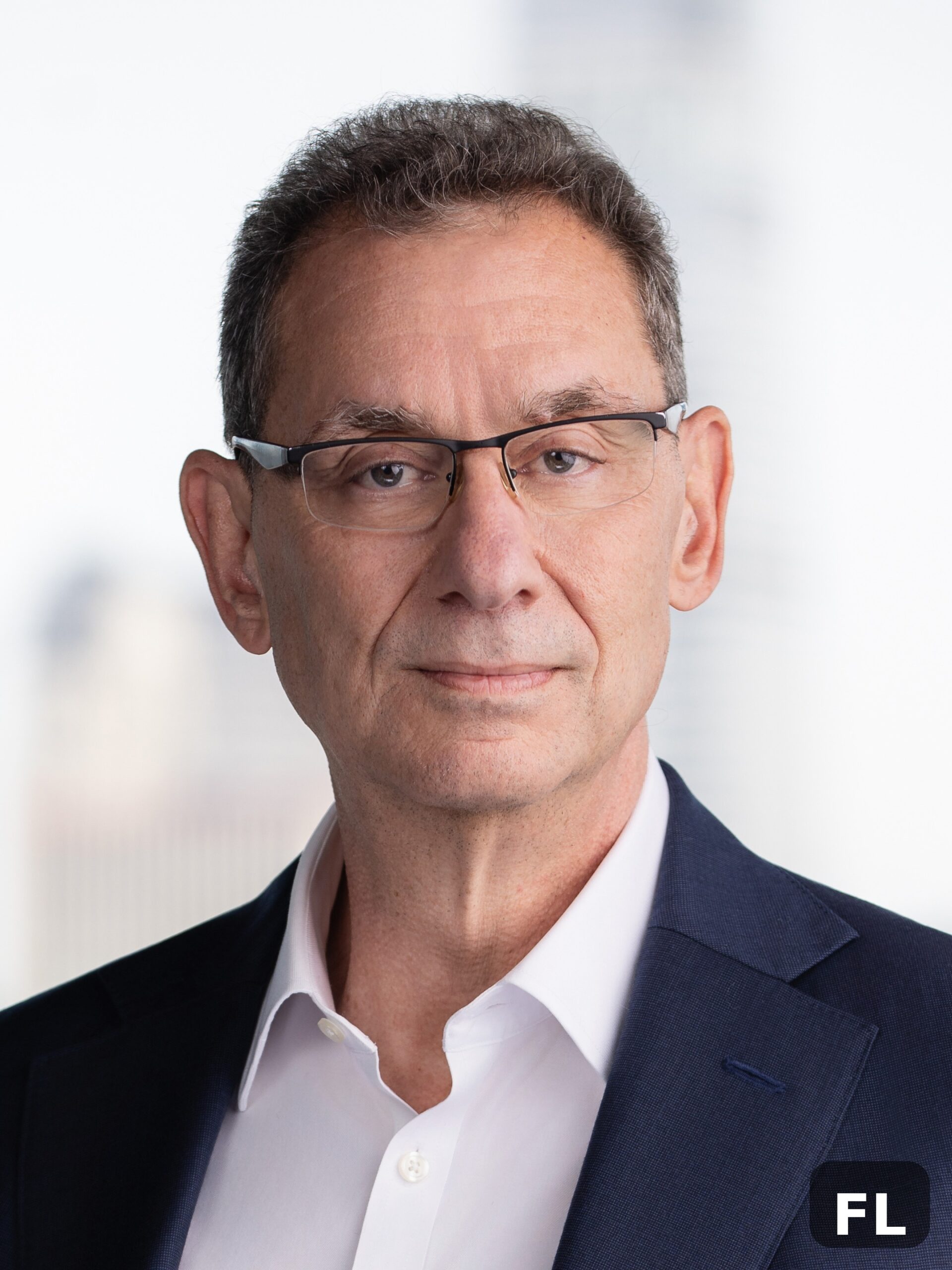
Both men became chief executive in 2019. Both were marketers and operators of a sort — except one sold beer and packaged food, and the other, trained as a veterinarian, ended up selling the world’s most famous vaccine. Miguel Patricio and Albert Bourla took over two giant companies in the same year, faced two very different crises, and left very different marks.
Patricio arrived at Kraft Heinz as an outsider hired to clean up a $15 billion write-down. Bourla rose inside Pfizer for 26 years before taking the top job, then led the company through the COVID-19 vaccine race and a $43 billion cancer-drug acquisition. Their pay reflects those stories: Bourla’s compensation at Pfizer is fully disclosed in US filings, while Patricio’s personal fortune, like that of many career executives, has never been given a verified public total.
This comparison covers who each man is, the route each took to the corner office in 2019, how each was rewarded, and where they stand in 2026 — including Pfizer’s post-pandemic reinvention and Patricio’s continuing role in Kraft Heinz’s planned split into two companies.
| Field | Miguel Patricio | Albert Bourla |
|---|---|---|
| Full name | Miguel Patricio | Albert Bourla |
| Best known as | Former CEO of Kraft Heinz | Chairman and CEO of Pfizer |
| Company | The Kraft Heinz Company | Pfizer Inc. |
| Nationality / background | Portuguese; business administration degree, Fundação Getulio Vargas, São Paulo | Born 21 October 1961, Thessaloniki, Greece; Greek-American |
| Education | Business Administration, Fundação Getulio Vargas | DVM, 1985, and PhD in biotechnology of reproduction, 1991, Aristotle University of Thessaloniki |
| CEO appointment | Kraft Heinz CEO from 1 July 2019 to end of 2023 | Pfizer CEO from 1 January 2019; chairman from January 2020 |
| Route to the top | External hire after 20 years at AB InBev | Internal promotion after joining Pfizer in 1993 |
| Estimated net worth | A verified personal figure has not been made public; no Forbes or Bloomberg listing | No Forbes billionaire listing; secondary estimates commonly place him in the tens of millions of dollars, driven by Pfizer pay and shares |
| Pay evidence | $1 million base salary on appointment in 2019, plus performance equity; he committed $20 million of his own money to Kraft Heinz shares | Total compensation of $21 million in 2020, $21.5 million in 2023 and $24.6 million in 2024, per Pfizer reporting |
| Source | Kraft Heinz filings and company releases | Pfizer proxy and compensation reporting |
Who Is Miguel Patricio?
Miguel Patricio is a Portuguese consumer-goods executive who spent two decades at Anheuser-Busch InBev before his headline appointment in food. He holds a degree in Business Administration from Fundação Getulio Vargas in São Paulo, Brazil, and built his early career across the Americas at Philip Morris, Coca-Cola and Johnson & Johnson before joining the brewing world that became AB InBev in the late 1990s.
At AB InBev he ran big regions and then the global brand machine itself. He was Zone President for North America in the 2000s, Zone President for Asia Pacific from 2008 to 2012, and Global Chief Marketing Officer from 2012 to 2018, overseeing the playbook for Budweiser, Corona and Stella Artois. In his final marketing year, AB InBev was the most awarded brand owner at Cannes Lions 2018.
That brand-builder profile is exactly why Kraft Heinz came calling. The company did not need another cost-cutter in 2019. It needed someone who understood why consumers had stopped caring about its brands.
Who Is Albert Bourla?
Albert Bourla was born on 21 October 1961 in Thessaloniki, Greece. His parents, Mois and Sara, were Sephardic Jews who were among the roughly 2,000 of Thessaloniki’s 50,000 Jews to survive the Holocaust — a family history Bourla has spoken about publicly, including how his mother narrowly escaped execution. He has said that history taught him that seemingly impossible things can happen.
He trained as a veterinarian, earning his doctorate in veterinary medicine in 1985 and a PhD in the biotechnology of reproduction in 1991, both at Aristotle University of Thessaloniki. In 1993 he joined Pfizer’s animal health division in Greece as a veterinarian and technical director.
He left Greece at 34 after a promotion, living thereafter in seven cities in four countries before settling in the United States. He ran animal health for Europe, Africa and the Middle East, led Pfizer’s established products business, then its global vaccines, oncology and consumer healthcare group, then Innovative Health. He became chief operating officer on 1 January 2018 and chief executive exactly a year later, succeeding his mentor Ian Read. In January 2020 he added the chairman’s title.
Patricio’s Rescue Job at Kraft Heinz
Patricio started as Kraft Heinz chief executive on 1 July 2019, succeeding Bernardo Hees, in the middle of a crisis. Weeks earlier the company had announced a $15 billion write-down on its Kraft and Oscar Mayer brands, disappointing results, a dividend cut and a Securities and Exchange Commission probe into procurement. The 3G Capital model of relentless cost-cutting was being blamed for starving famous brands of investment.
His appointment terms showed both the scale of the task and his willingness to share the risk. Kraft Heinz filings set his base salary at $1 million a year, with a target bonus of 300 percent of salary and large performance-based equity awards. Notably, Patricio committed to invest $20 million of his own money in Kraft Heinz shares, subject to a holding restriction — a public signal that the new boss would eat his own cooking.
His four and a half years were a stabilisation act rather than a triumph. He simplified the portfolio, selling businesses including the nuts operation, increased marketing support behind core brands, strengthened the balance sheet and pushed organic growth back above pre-pandemic levels, helped by price rises across the industry during inflation. Volumes, however, came under pressure as shoppers traded down, a problem shared by almost every packaged-food company in that period.
In August 2023 Kraft Heinz announced he would step down. Carlos Abrams-Rivera, the North America president, became CEO on 1 January 2024, and Patricio moved to non-executive chair of the board — a role company filings list him holding from May 2022 as chair through to December 2025 in combined form. His story did not end with the handover, as the next section explains.
Bourla’s Defining Years at Pfizer
Bourla’s legacy was settled within two years of taking over. In 2020 he pushed Pfizer, with German partner BioNTech, to develop a COVID-19 vaccine at unprecedented speed, telling his team that financial returns should not drive the decisions and authorising production before regulatory approval so doses could ship immediately. The Pfizer-BioNTech vaccine became the first authorised in Western countries, and Pfizer’s revenue passed $100 billion in 2022, more than double pre-pandemic levels.
He recorded the story in his 2022 book Moonshot, and that year received the $1 million Genesis Prize, which he directed toward Holocaust education and the planned Holocaust Museum of Greece in Thessaloniki. In 2026 he was elected to the American Academy of Arts and Sciences.
The post-pandemic task has been harder. As vaccine revenue fell away, Bourla refocused Pfizer on research and oncology. In March 2023 he announced the $43 billion acquisition of Seagen, the largest deal of his tenure, roughly doubling Pfizer’s early-stage cancer pipeline. In November 2025 Pfizer announced a $10 billion acquisition of Metsera, a developer of obesity and metabolic treatments, with Bourla setting out plans to launch GLP-1 therapies by 2028. Pfizer reported 2025 revenue of about $62.6 billion, with further cost savings targeted through 2026 and 2027 — themes regularly tracked in business coverage on Flasher Magazine.
His pay tracks that arc in Pfizer’s own disclosures: about $21 million in total compensation in 2020, $21.5 million in 2023, and $24.6 million in 2024. Only a small part is base salary; most is stock, options and performance incentives, which is also why estimates of his personal net worth — generally in the tens of millions — move with Pfizer’s share price.
Miguel Patricio and Albert Bourla: The Comparison
Neither man is a founder, and neither appears on a Forbes billionaire list. This is a comparison inside executive wealth, which makes the details more interesting, not less. Both were paid in the same currency of modern CEO life — modest base salary by their standards, and very large performance equity — but Bourla’s package at a US pharmaceutical giant, disclosed year by year, has run larger and for longer.
Their routes explain their styles. Patricio is the external specialist: hired across companies and categories, fluent in brands, pricing and distribution, and brought in when a board wants change faster than an insider might deliver it. Bourla is the institutional insider: a scientist by training who spent 26 years learning one highly regulated company — its research engine, manufacturing, regulators and markets — before running it.
Their defining tests were mirror images. Patricio had to shrink and repair: cut a sprawling portfolio, rebuild trust after a write-down, and make old brands relevant again. Bourla had to spend and expand at speed: build a vaccine in months, then spend $43 billion on Seagen and $10 billion on Metsera to replace pandemic revenue with cancer and obesity franchises. One mandate was discipline after excess. The other was ambition after emergency.
On verifiable numbers, Bourla is the more visibly wealthy of the two simply because US disclosure is fuller. His annual compensation alone has exceeded $20 million in multiple disclosed years, accumulating Pfizer shares over a long tenure. For Patricio, the clearest documented personal figure is not a net-worth estimate at all; it is that $20 million share commitment in 2019. Any precise net-worth total for him has not been made public, and round numbers on aggregator sites should be read with that caveat.
Where They Are Now
Bourla remains Pfizer’s chairman and chief executive in 2026, now deep into the company’s post-COVID rebuild. His agenda is oncology from Seagen, the integration of Metsera and a return to growth as cost programmes deliver savings through 2026 and 2027. He concluded his term as chair of the industry body PhRMA in February 2026 and remains one of the most recognisable chief executives in global healthcare.
Patricio’s second act has stayed inside the Kraft Heinz story. After stepping down as CEO he remained on the board and as chair, and when Kraft Heinz announced in September 2025 that it would separate into two public companies — a North American grocery business and a “Global Taste Elevation” company built around Heinz, Philadelphia and Kraft Mac & Cheese, together about $15.4 billion in 2024 sales — Patricio, as chair, was named to serve as Executive Chair in the separation structure. The split is targeted for the second half of 2026, which would make the marketer hired to rescue one food giant the chairman helping to divide it into two.
Bottom Line
Miguel Patricio and Albert Bourla both took over in 2019, but they were hired — one from outside, one from within — to solve opposite problems. Patricio repaired trust and a balance sheet at Kraft Heinz, putting $20 million of his own money into its shares as a statement of intent. Bourla turned scientific depth and institutional knowledge into a vaccine, a record revenue year and two of the biggest deals in recent pharmaceutical history.
On documented pay, Bourla’s Pfizer compensation, disclosed at up to $24.6 million in 2024, puts him ahead in visible executive earnings. On everything else, the honest answer is that only one of these fortunes is even partly countable from public filings, and neither is a billionaire fortune. Their real wealth is the kind top operators actually accumulate: a decade of eight-figure paydays, shares that rise and fall with the companies they led, and reputations that keep them in the room when the next big decision is taken.
Frequently Asked Questions
Who earns more, Miguel Patricio or Albert Bourla?
On disclosed figures, Albert Bourla. Pfizer reported his total compensation at $21.5 million in 2023 and $24.6 million in 2024. Patricio’s Kraft Heinz package began with a $1 million base salary plus bonus and performance equity in 2019, but a directly comparable, fully disclosed annual total for his later years is not presented in the same public way.
What is Miguel Patricio’s net worth?
A verified personal net-worth figure for Patricio has not been made public, and he has no Forbes or Bloomberg billionaire listing. The best-documented personal figure from his Kraft Heinz appointment is his commitment to invest $20 million of his own money in company shares.
What is Albert Bourla’s net worth?
Bourla also has no Forbes billionaire listing. Secondary estimates commonly place his net worth in the tens of millions of dollars, consistent with Pfizer compensation of more than $20 million a year in several disclosed years and long-held Pfizer stock, but no major wealth index publishes a verified total.
When did Miguel Patricio leave Kraft Heinz as CEO?
He stepped down at the end of 2023. Carlos Abrams-Rivera became chief executive on 1 January 2024, and Patricio became non-executive chair, remaining central to the board as Kraft Heinz planned its separation into two companies.
How long has Albert Bourla been at Pfizer?
Since 1993, when he joined the animal health division in Greece as a veterinarian and technical director. He became chief operating officer in 2018, chief executive on 1 January 2019 and chairman in January 2020.
Are Miguel Patricio and Albert Bourla connected?
No direct connection is known. They are compared because both became chief executives in 2019 — Patricio as an external hire at Kraft Heinz, Bourla as an internal promotion at Pfizer — and faced defining crises in their first years in charge.