

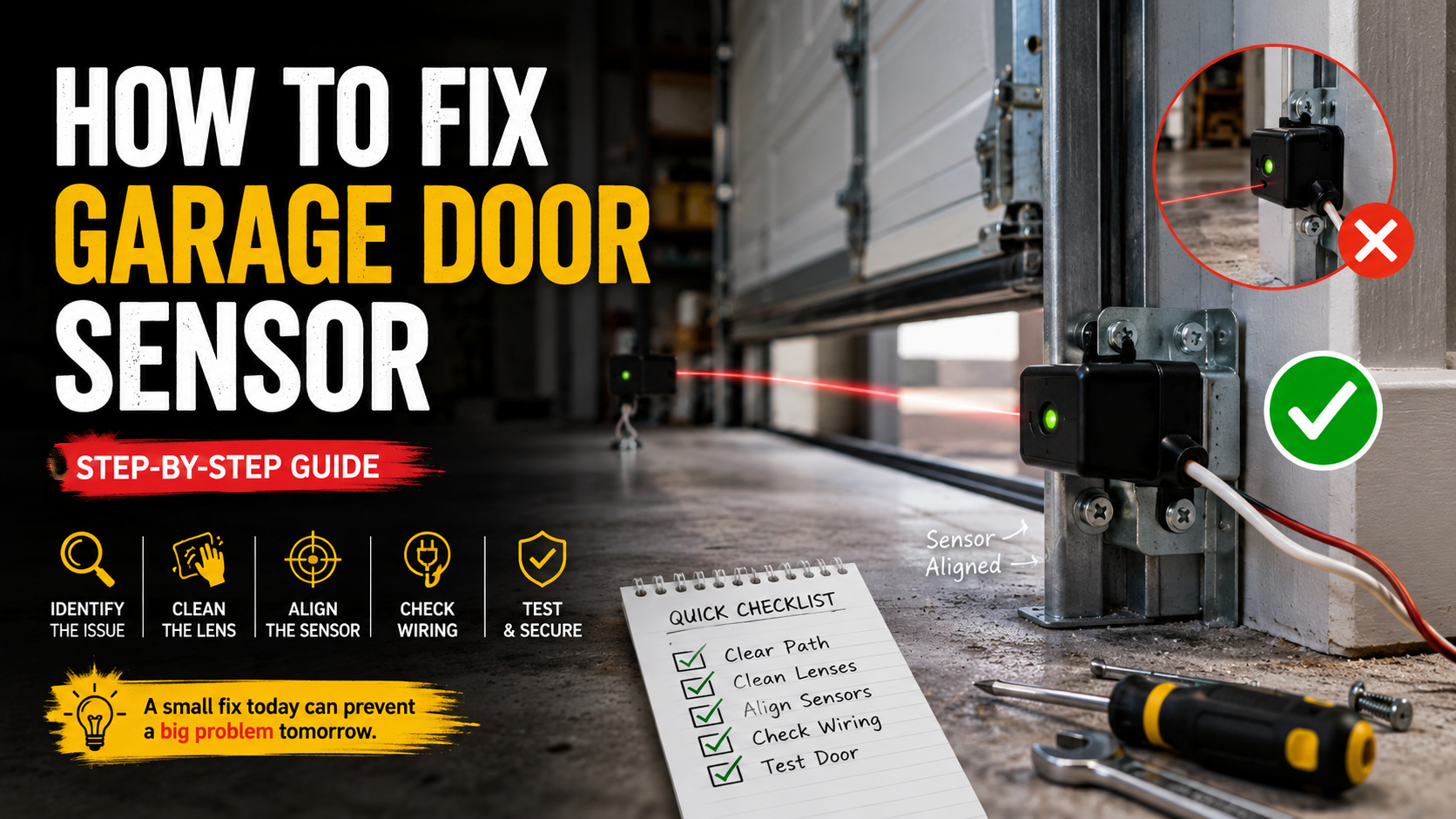
A garage door sensor is one of the most important safety features on a modern garage door system. These small devices prevent the door from closing when something is in the way, helping protect s8, pets, vehicles, and belongings.
If your garage door refuses to close, reverses unexpectedly, or shows blinking sensor lights, you may be wondering how to fix garage door sensor problems quickly and safely. The good news is that many sensor issues can be solved without calling a professional.
This guide explains how to fix garage door sensor problems step by step, covering the most common causes, troubleshooting methods, and preventive maintenance casino s8.
Understanding How Garage Door Sensors Work
Before learning how to fix garage door sensor issues, it helps to understand how the system works.
Garage door sensors are usually mounted near the floor on both sides of the garage door opening. One sensor sends an invisible infrared beam, while the other receives it.
When the beam remains uninterrupted, the garage door closes normally. If something blocks the beam, the door stops or reverses direction.
As many garage technicians say, “The sensor may be small, but it controls one of the most important safety functions in your entire garage.”
Signs Your Garage Door Sensor Needs Repair
Several warning signs indicate a sensor problem.
Garage Door Won’t Close
The door starts closing but immediately reverses or refuses to move downward.
Blinking Sensor Lights
Most sensors have LED indicators. Flashing lights often mean the sensors are misaligned.
Door Closes Only When Holding the Wall Button
This usually suggests the safety sensor system is not functioning correctly.
Intermittent Operation
Sometimes the door works perfectly and other times it doesn’t, often indicating loose wiring or alignment issues.
Recognizing these symptoms early makes how to fix garage door sensor problems much easier.
Common Reasons Garage Door Sensors Stop Working
Understanding the cause helps you choose the right solution.
Dirty Sensor Lenses
Dust, cobwebs, dirt, or moisture can block the sensor beam.
Even a thin layer of dirt can interfere with communication between the sensors.
Misaligned Sensors
Accidental bumps from bicycles, lawn equipment, or storage items can shift the sensors out of position.
When they no longer face each other correctly, the door may stop working.
Loose or Damaged Wiring
Over time, wires can loosen, become disconnected, or suffer damage from pests or weather conditions.
Sunlight Interference
Direct sunlight can sometimes affect sensor performance by overwhelming the receiver.
Physical Damage
Cracked sensor housings or broken brackets can prevent proper operation.
How to Fix Garage Door Sensor: Step-by-Step
If you’re searching for how to fix garage door sensor, follow these practical troubleshooting steps.
Step 1: Check for Obstructions
Start with the simplest solution.
Look between the two sensors and remove any objects blocking the beam, including:
- Boxes
- Trash cans
- Garden tools
- Toys
- Leaves
- Debris
Many homeowners spend hours troubleshooting only to discover a small object was blocking the beam.
Step 2: Clean the Sensor Lenses
Dirty lenses are one of the most common causes of sensor problems.
Use:
- A soft microfiber cloth
- Mild glass cleaner if necessary
- Gentle wiping motions
Avoid abrasive materials that could scratch the lenses.
After cleaning, test the garage door again.
Step 3: Inspect the Sensor Lights
Most garage door sensors have LED indicators.
Generally:
- Solid green or solid amber lights indicate normal operation.
- Blinking lights usually indicate alignment issues.
- No lights may indicate power or wiring problems.
Check your manufacturer’s manual for exact light meanings.
Step 4: Realign the Sensors
One of the most effective solutions when learning how to fix garage door sensor issues is proper alignment.
Loosen the mounting brackets slightly.
Adjust the sensors until both indicator lights become solid and stable.
Once aligned:
- Tighten the brackets carefully.
- Avoid moving the sensors while tightening.
- Test the door multiple times.
Think of sensor alignment like lining up two flashlights facing each other. If either flashlight points away, communication fails.
Step 5: Check the Wiring
Inspect all visible wires connected to the sensors.
Look for:
- Loose connections
- Frayed wires
- Cuts
- Corrosion
- Rodent damage
If you notice disconnected wires, reconnect them according to your garage door manufacturer’s instructions.
Always disconnect power before handling electrical components.
Step 6: Verify Power Supply
A sensor without power cannot communicate properly.
Check:
- Garage door opener power
- Circuit breakers
- GFCI outlets
- Plug connections
A simple power issue can sometimes appear to be a major sensor malfunction.
Step 7: Test Sensor Functionality
After completing the previous steps, test the system.
Place an object in the sensor beam path while closing the door.
The door should immediately stop or reverse.
If it does, the sensors are functioning correctly.
How to Fix Garage Door Sensor Alignment Problems
Sensor alignment deserves special attention because it causes many service calls.
Alignment Checklist
- Both sensors should face directly toward each other.
- Mounting brackets should be secure.
- Sensor heights should match.
- Indicator lights should remain solid.
Even a slight shift of a few millimeters can disrupt the infrared beam.
A useful tip from garage professionals is, “If the sensor lights aren’t steady, alignment should be your first suspect.”
When Sunlight Causes Sensor Problems
Sometimes homeowners struggle with how to fix garage door sensor issues caused by bright sunlight.
This often happens during specific times of the day when sunlight directly hits the receiver sensor.
Possible solutions include:
- Installing a small sun shield.
- Repositioning the sensor slightly.
- Using manufacturer-approved protective covers.
This simple adjustment can eliminate recurring issues.
How to Fix Garage Door Sensor After Heavy Rain or Humidity
Weather can affect sensor performance.
Moisture may:
- Fog sensor lenses
- Corrode electrical connections
- Affect wiring performance
To solve weather-related issues:
- Dry the lenses completely.
- Check for water damage.
- Inspect wire connections.
- Ensure sensor housings remain sealed.
Regular inspections after storms can prevent future problems.
Preventing Future Garage Door Sensor Problems
Learning how to fix garage door sensor issues is helpful, but prevention is even better.
Keep Sensors Clean
Wipe sensor lenses every few weeks.
Dust buildup is easy to prevent and often causes avoidable problems.
Avoid Bumping the Sensors
Be careful when moving:
- Bicycles
- Storage bins
- Lawn equipment
- Sports gear
Accidental contact often causes alignment problems.
Perform Monthly Safety Tests
Test the sensors regularly by placing an object in the beam path.
A quick monthly check helps catch issues before they become serious.
Inspect Wiring Periodically
Look for wear, loose connections, and signs of damage.
Small repairs today can prevent larger repairs later.
When to Replace Garage Door Sensors
Sometimes repair isn’t enough.
You may need replacement sensors if:
- Sensor housings are cracked.
- Internal electronics have failed.
- Repeated troubleshooting doesn’t solve the issue.
- Sensors are extremely old.
Replacement sensors are often affordable and can restore full system reliability.
When to Call a Professional
While many homeowners can handle how to fix garage door sensor tasks themselves, some situations require expert help.
Consider professional service if:
- Wiring repairs are extensive.
- Sensors repeatedly fail.
- The opener system has electrical issues.
- The door behaves unpredictably after troubleshooting.
A qualified technician can diagnose deeper problems quickly and safely.
Final Thoughts
Knowing how to fix garage door sensor problems can save time, money, and frustration. Most issues come down to dirty lenses, blocked beams, poor alignment, loose wiring, or minor power problems.
Start with simple troubleshooting steps before assuming a major repair is needed. In many cases, a few minutes of cleaning and adjustment can restore normal operation.
Remember, garage door sensors are designed to protect your family and property. As the saying goes, “A properly working sensor is a small device that prevents big accidents.” Regular maintenance and quick attention to warning signs will help keep your garage door operating safely and reliably for years to come.
Also Read: Flasher Magazine