

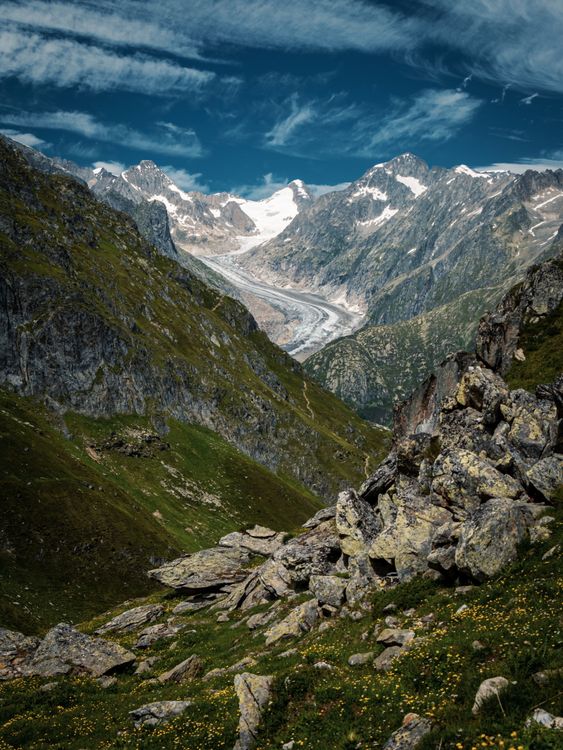
Enntal is a word that looks like a place, and in one important sense it is — but the spelling most travellers and mapmakers use has an extra letter. The valley in question is the Ennstal, the valley of the River Enns in Austria, and “Enntal” is the common variant spelling that appears in English-language searches, travel writing, and online guides. This briefing gives you the key facts first: where the valley is, what runs through it, why the two spellings exist — and what online guides claim about the word beyond geography, which is considerably less solid.
The distinction matters because it changes how you search. If you type “Enntal” into a map or a travel site, you may get fewer or vaguer results than if you type “Ennstal”. If you read a guide that treats “enntal” as a business philosophy or a startup mindset, you are reading a different usage altogether — one with no connection to the Austrian valley beyond the shared letters. Both usages are covered below, with the verified geography first and the unverified claims clearly labelled.
Key facts at a glance
What we know: the Enns is one of the longest rivers entirely within Austria, flowing roughly west to east for more than 250 kilometres through the northern Alps before bending south-east to join the Danube near the historic town of Enns. The valley it carves — the Ennstal, from “Enns” plus “Tal”, the German word for valley — stretches across the federal states of Salzburg, Styria, and Upper Austria. Major towns along the valley include Radstadt, Schladming, Liezen, Admont, and Altenmarkt im Pongau, and nearby mountain ranges include the Dachstein Massif, the Schladminger Tauern, and the Gesäuse region, home to Gesäuse National Park. What we do not know, or rather what is not standard: any official status for the spelling “Enntal”. Locals overwhelmingly use “Ennstal”, and “Enntal” appears as an informal variant or search term in English-language material, not as the official German name.
What we know: the valley on the map
Picture the Alps fanning eastward from Salzburg. The Enns rises near the Radstädter Tauern, flows past the ski hub of Schladming, cuts through the dramatic Gesäuse gorge country, and continues toward the Danube. The corridor it follows is both a landscape and a transport route: the B320 and E651 highway traces its middle section, and the Ennstal railway offers a scenic line connecting Salzburg with Styria and Upper Austria. That combination — a river, a road, and a railway sharing one alpine trough — is why the valley has been a route as much as a destination for centuries, carrying trade, travellers, and, in modern times, skiers and hikers.
The valley’s character changes along its length. In the west, around Radstadt and Altenmarkt im Pongau, it is closely tied to Salzburg’s alpine tourism, with ski areas and mountain villages. Around Schladming, it is a major winter-sports centre, known internationally for skiing and for the steep, dramatic terrain of the surrounding Tauern ranges. Further east, around Liezen and Admont, the valley broadens into a regional centre with historic sites — Admont is known for its abbey — before the river cuts through the Gesäuse, one of Austria’s most striking gorge landscapes, now protected as a national park. At the valley’s end, the river reaches the Danube near Enns, a town often described as Austria’s oldest, giving the whole route a neat historical bookend.
For travellers, the practical point is that “the Ennstal” is not a single resort or a single attraction. It is a long corridor with many bases, and the right base depends on what you want: skiing around Schladming, hiking in the Gesäuse, cultural stops at Admont, or a scenic rail journey along the whole line. Guides that present it as one place with one highlight are flattening a region that rewards slower exploration.
What we know: why two spellings exist
The spelling question is straightforward once the German is unpacked. “Enns” is the river’s name, ending in “s”. “Tal” means valley. Put them together and the compound is “Ennstal”, with the double “s” preserved from the river’s name. English-language writers, dropping a letter either by mistake or by simplification, produce “Enntal” — and because search engines and content farms repeat what they find, the variant acquires a life of its own. Travel writers, tourism databases, and international guides sometimes use “Enntal” for global audiences even though Austrian usage prefers “Ennstal”.
This is a useful general lesson about place names online: the most common search spelling is not always the correct local spelling, and a variant that appears frequently may simply be a repeated error rather than an accepted alternative. If you are booking transport, accommodation, or a guided activity, use “Ennstal” — and the German names of the specific towns — to avoid confusion. If you are researching in English and finding thin results, try both spellings, but treat “Ennstal” as the authoritative one.
What we do not know: the non-geographic claims
Separate from the valley, some online guides present “enntal” as a concept in business and technology: an “infrastructure mindset” for startups, blending automation, analytics, scalable architecture, and intelligent monitoring into one integrated ecosystem. In this telling, enntal is a philosophy of building systems that scale smoothly, adapt in real time, and generate actionable insights without operational chaos. It sounds impressive, and some of the underlying advice — integrate your tools, automate manual work, let analytics drive decisions — is sensible generic business guidance.
What is missing is any evidence that “enntal” is an established term for that philosophy. No founder, no company, no publication, no conference, and no dated origin is cited for the business usage, and the guides that promote it read as template-style trend writing rather than reporting on a documented movement. The sensible conclusion is that the business meaning is an unverified repurposing of the valley’s name — or of a coined word that happens to share its letters — and not a term you will find in management literature or startup practice. If someone uses “enntal” in a business meeting, ask them to define it; the definition will tell you more than the word does.
Visiting the valley: what to keep in mind
If the geography is what brought you here, a few practical notes follow from the facts above. The valley is long, so plan around sections rather than trying to cover it in a day. Winter visitors should focus on the Schladming area and check snow and lift conditions locally. Summer visitors interested in walking should look at the Gesäuse National Park and the Dachstein region, with proper mountain preparation. Rail travellers can use the Ennstal line as a scenic route in its own right, breaking the journey at towns along the way. And throughout, remember that conditions, opening times, and transport details change seasonally — verify them with local sources close to your travel date rather than relying on a general guide.
One more caution: because “Enntal” is a variant spelling, some online travel content using that spelling may be thin, outdated, or generated without local knowledge. Cross-check anything important — especially accommodation, transport times, and access to protected areas — against official tourism or transport sources under the “Ennstal” spelling.
Questions readers keep asking
A few practical questions follow naturally from the geography. First, is the Ennstal a good destination outside the ski season? Yes, with different expectations: summer brings hiking, cycling, and gorge walking in the Gesäuse, while the shoulder seasons suit cultural stops and rail journeys, though some mountain facilities close between seasons and should be checked in advance. Second, how long does it take to travel the valley? It is a corridor, not a single stop, so the honest answer is that a scenic rail or road journey along its length is a full-day undertaking, while a satisfying visit to one section — Schladming for winter sports, Admont for its abbey, the Gesäuse for walking — fits comfortably into a shorter stay. Third, does the spelling matter for bookings? It does in practice: transport timetables, accommodation listings, and official tourism pages overwhelmingly use “Ennstal” and the German town names, so searching with the variant spelling can return thinner or less reliable results. Use the local spelling when money or reservations are involved, and keep “Enntal” only as a fallback search term when English-language results run dry.
The bottom line
Enntal, in its verified sense, is the Enns Valley of Austria — the Ennstal — a long alpine corridor across Salzburg, Styria, and Upper Austria, shaped by a river over 250 kilometres long, served by road and rail, and anchored by towns from Radstadt to Admont. What we know is the geography; what we do not know, or should not accept without evidence, is any separate business or philosophical meaning for the word, which appears only in unverified guide-style articles. Spell it “Ennstal” when you search for the place, and treat the other meaning as a claim awaiting its first primary source. For another briefing where a spelling variant changes the whole story, our look at unfamiliar online terms shows the same discipline at work: verify the place, flag the rest.