

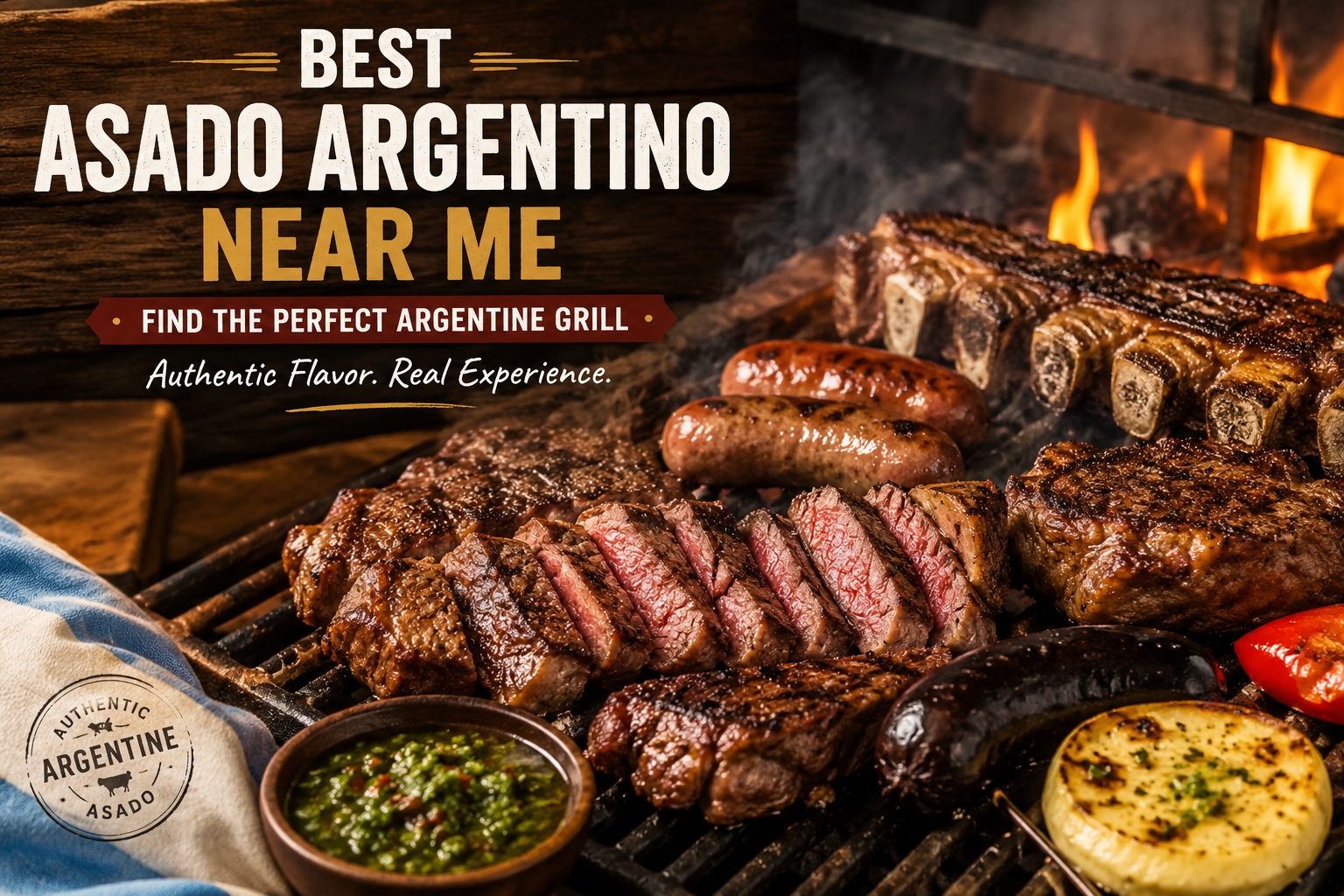
Searching for the best asado argentino near me usually means one thing: you want more than an ordinary steak. You want smoky meat, a proper parrilla, good cuts, simple seasoning, and the kind of meal that feels worth leaving the house for.
The problem is that plenty of restaurants use words like “Argentine,” “steakhouse,” or “grill” without delivering a real asado experience. A huge steak, fancy plating, and a high price do not automatically equal authentic Argentine barbecue.
Traditional asado is both a cooking method and a social meal built around meat cooked over a parrilla and shared at an unhurried pace. Official Argentine tourism sources describe it as much more than simply putting beef on a grill; gathering around the fire and eating together are central to the tradition.
So, how do you separate a genuinely good Argentine grill from a basic steakhouse wearing an Argentine costume? Here is what actually matters.
What Makes a Great Argentine Asado?
A good asado starts with the fire.
Traditional Argentine grilling relies on controlled heat from wood or charcoal rather than aggressive flames burning directly against the meat. The goal is steady cooking, a well-developed crust, and deep grilled flavor without turning the outside into charcoal.
The parrillero, or grill cook, matters just as much as the beef. Great meat can still be ruined by rushed cooking, excessive flames, constant flipping, or poor heat control.
A strong restaurant keeps seasoning simple. Salt is often the star because proper asado is supposed to showcase the beef rather than bury it under thick marinades and sugary sauces.
As the saying goes, “When the meat is good and the fire is right, the cook does not need to hide behind a bottle of sauce.”
How to Find the Best Asado Argentino Near Me
Start with the restaurant’s actual menu, not its advertising.
A genuine Argentine grill should normally offer several recognizable parrilla cuts rather than only burgers, sirloin, and one generic “Argentine steak.” Look for cuts such as asado de tira, vacío, entraña, bife de chorizo, and ojo de bife.
Then check recent customer photos. Photos are usually more useful than polished promotional images because they reveal portion size, doneness, grill marks, sides, and whether the food consistently looks good.
Pay close attention to reviews that mention specific dishes. “Amazing restaurant” tells you almost nothing. “The vacío had a smoky crust and stayed juicy inside” is useful.
When comparing results for the best asado argentino near me, prioritize consistency over one viral photo. A restaurant with dozens of recent customers praising the parrilla is usually a safer choice than a trendy place surviving on interior design and influencer lighting.
The Menu Should Look Like a Parrilla Menu
A proper Argentine grill usually gives meat a central role.
This does not mean the restaurant needs a giant menu. In fact, a focused selection is often a positive sign because grilling several cuts correctly requires timing, temperature control, and experience.
Official Argentine sources identify classic asado foods such as chorizo, morcilla, sweetbreads, short ribs, vacío, matambre, grilled vegetables, chimichurri, and salsa criolla.
Look for a menu containing at least some of these:
- Asado de tira – cross-cut beef short ribs
- Vacío – flavorful flank-area cut
- Entraña – skirt steak with strong beef flavor
- Bife de chorizo – thick sirloin-style steak
- Ojo de bife – ribeye
- Chorizo – grilled Argentine-style sausage
- Morcilla – blood sausage
- Provoleta – grilled provolone cheese
Not every great restaurant serves all of them. But when none of these appear, you are probably looking at a regular steakhouse rather than a serious Argentine parrilla.
The Best Cuts to Order First
Choosing the right cut can make or break your first visit.
If you love strong beef flavor, start with entraña. It is thinner than many steakhouse cuts, but when cooked properly, it offers a deep, concentrated flavor and a satisfying grilled exterior.
For something richer and more familiar, order ojo de bife. The fat running through ribeye helps keep the meat juicy and gives it a luxurious texture.
Bife de chorizo is another safe choice for anyone who likes a thick, substantial steak. Despite the name, it is beef, not sausage.
For a more traditional parrilla experience, choose asado de tira or vacío. Michelin’s guide to Argentine beef highlights rib, flank, ribeye, sirloin, loin, and related “parrillero” cuts as important meats suited to cooking over the embers of the parrilla.
The honest rule is simple: do not automatically order the most expensive steak. “Premium” pricing does not guarantee the most interesting asado experience.
Start With Chorizo or Provoleta
A great Argentine meal should not feel like a race toward the main steak.
Start with chorizo if the restaurant makes or sources a good version. It should be juicy, well browned, and flavorful without tasting like an aggressively spicy supermarket sausage.
You can also order provoleta, a thick piece of provolone cheese cooked until the exterior develops a crust while the center stays soft.
For groups, sharing starters makes more sense. Order one or two items for the table, taste them slowly, and save room for the meat.
“A great asado is not fast food with better beef; the waiting, sharing, and anticipation are part of the meal.”
Check the Parrilla Before You Trust the Restaurant
When possible, look for an open or visible grill.
A real parrilla does not have to be theatrical, but the restaurant should take its cooking method seriously. Wood, charcoal, embers, adjustable grill height, and a dedicated parrillero are strong signs.
A giant gas grill is not automatically bad, but it may deliver a different experience from the traditional style people usually expect when searching for the best asado argentino near me.
You should also notice the aroma. A serious grill restaurant usually smells faintly smoky and beefy before the food even reaches the table.
But smoke alone proves nothing. Burning meat produces smoke too. The result on the plate still matters.
How the Meat Should Be Cooked
The best doneness depends partly on the cut.
A thick ribeye can work beautifully at medium-rare or medium. Short ribs and some tougher cuts may need slower cooking to soften connective tissue and develop flavor.
Do not assume every piece of Argentine beef must arrive nearly raw. Different cuts respond to heat differently.
A good server should be able to explain the restaurant’s recommended doneness. That is a positive sign because it shows the kitchen understands its cuts rather than treating every steak identically.
What you do not want is meat that is aggressively charred outside, cold inside, and described as “authentic.” That is not rustic charm. That is bad temperature control wearing a little gaucho hat.
Look for Simple, Traditional Sides
The meat should remain the main event.
Classic accompaniments can include mixed salad, fries, grilled vegetables, chimichurri, and salsa criolla. Argentine government tourism material also identifies mixed salad and fries as common sides alongside grilled meats.
Good chimichurri should brighten the meat rather than completely cover it. Garlic, herbs, acidity, oil, and seasoning create contrast against rich grilled beef.
Salsa criolla is another excellent addition. Its fresh vegetables and acidity can cut through fattier cuts.
Be suspicious when every steak arrives buried under heavy cream sauce, barbecue glaze, melted cheese, or a mountain of toppings. That may taste good, but it is not what most diners are searching for when they want serious Argentine asado.
Read Reviews the Smart Way
Online ratings can help, but they are easy to misuse.
Do not choose a restaurant simply because it has 4.8 stars. A small restaurant may have a high score from very few reviews, while a long-established parrilla may have thousands of mixed opinions.
Read the newest reviews first.
Look for repeated comments about:
- Meat quality
- Correct doneness
- Smoky parrilla flavor
- Friendly, knowledgeable service
- Fair portion sizes
- Consistent cooking
Negative patterns matter too. Repeated complaints about cold steaks, overcooked meat, long unexplained waits, poor hygiene, or incorrect orders deserve attention.
One angry review proves little. Twenty people reporting the same problem is a pattern, not bad luck.
Recent Food Photos Matter More Than the Website
Restaurant websites show the meal on its best day.
Customer photos show Tuesday night.
Check recent pictures of the exact cuts you plan to order. The meat should look properly seared, juicy, and consistently prepared across different visits.
Also inspect side dishes and starters. Weak restaurants sometimes put all their effort into one hero steak while everything else feels cheap and careless.
When searching for the best asado argentino near me, compare photos from multiple customers rather than trusting a single professional shoot.
A restaurant that repeatedly serves attractive, properly cooked food is a better bet than one magnificent image surrounded by fifty disappointing plates.
Authentic Does Not Mean Expensive
Some excellent parrillas are polished and expensive. Others are simple neighborhood restaurants.
Price alone is a useless test of authenticity.
What matters is the relationship between meat quality, portion size, cooking skill, service, and the overall experience.
Before visiting, check whether the menu prices are listed per portion, per weight, or for a sharing platter. This is especially important with premium cuts and large parrilladas.
A smart order for two people might include one starter, two different cuts to share, one or two sides, and sauces. That gives you more variety than ordering two massive steaks and surrendering halfway through dinner.
“The best-value meal is not the cheapest plate; it is the one you would gladly pay for again.”
Should You Order a Parrillada?
A parrillada is an excellent choice for groups or first-time visitors.
It usually brings a selection of grilled meats and may include sausages, ribs, steaks, or offal, depending on the restaurant.
The advantage is variety. You can taste several parts of the Argentine grill tradition in one meal.
The disadvantage is timing. Different meats cook at different speeds, so a poorly managed mixed grill can arrive with one item perfect and another dry.
Before ordering, ask exactly what the parrillada includes and how many people it realistically serves. Restaurant menu language can be optimistic. A platter “for two” sometimes feeds three people; elsewhere, it barely feeds one hungry adult.
Red Flags to Avoid
Some restaurants market the idea of asado better than they cook it.
Be cautious when you see:
- A menu with no recognizable Argentine cuts
- Every meat covered in sauce
- No information about the grill or cooking method
- Mostly old customer reviews
- Repeated complaints about incorrect doneness
- Suspiciously identical promotional photos
- Staff unable to explain basic cuts
Another red flag is a menu that tries to do everything. A restaurant serving sushi, pasta, burgers, tacos, curry, pizza, and “authentic Argentine asado” from the same kitchen deserves a raised eyebrow.
Focus is usually a good sign.
A serious parrilla does not need to turn dinner into a theme park. Good fire, good meat, good timing. That is the job.
What to Ask Before Ordering
You do not need to interrogate the server like a meat detective.
A few normal questions are enough:
- Which cut is most popular today?
- Which cut has the strongest beef flavor?
- What doneness does the chef recommend?
- Is this portion suitable for sharing?
- What is included in the parrillada?
- Is the meat cooked over wood, charcoal, or another heat source?
Good staff should answer clearly.
When a server confidently explains the difference between vacío and ribeye, recommends an appropriate doneness, and warns that a portion is large enough to share, you are probably in capable hands.
When the answer to everything is “all steaks are good,” you have learned absolutely nothing.
How to Get the Best Experience on Your First Visit
Do not over-order immediately.
Start with chorizo, provoleta, or another small appetizer. Then share two contrasting cuts, perhaps entraña for intense flavor and ojo de bife for richness.
Add a fresh side and one potato-based side. Use chimichurri as a complement, not as camouflage.
Take your time between courses. Asado culture is closely connected with gathering and sharing rather than eating as quickly as possible. Argentine tourism sources consistently present the meal as a social ritual built around the grill.
For your first visit, judge the basics. Was the meat cooked correctly? Did it taste of the grill? Were the cuts good quality? Was the service knowledgeable?
Those questions matter more than whether the restaurant had leather chairs and a decorative cow on the wall.
Finding the Best Asado Argentino Near Me for Different Occasions
The “best” restaurant changes depending on the occasion.
For a casual meal, look for a neighborhood parrilla with strong recent reviews, generous portions, and straightforward pricing.
For a date or special event, atmosphere and service matter more. Choose a place where you can enjoy the meal without feeling rushed or shouting over loud music.
For a group, prioritize sharing platters, large tables, reservation options, and clear portion guidance.
For serious meat lovers, focus on cut selection, the quality of the parrilla, and whether the staff can explain sourcing and cooking.
There is no universal winner. The right restaurant is the one that matches the experience you actually want.
Frequently Asked Questions
What is Argentine asado?
Argentine asado is a style and tradition of grilling meat, usually over controlled heat from embers on a parrilla. It is also a social meal often built around sharing several grilled foods over time.
What should I order at an Argentine restaurant?
For a first visit, try chorizo or provoleta, followed by a classic cut such as entraña, vacío, asado de tira, bife de chorizo, or ojo de bife.
Is Argentine asado spicy?
Usually, no. The meat itself is generally not heavily spiced. The focus is on the quality of the meat, salt, fire, and sauces such as chimichurri served alongside.
What is the best Argentine steak cut?
There is no single winner. Choose ojo de bife for richness, entraña for strong flavor, bife de chorizo for a thick classic steak, or asado de tira for a more traditional grilled-rib experience.
How do I know whether an Argentine restaurant is authentic?
Look for a serious parrilla, recognizable Argentine cuts, simple seasoning, traditional starters and sides, knowledgeable staff, and consistently strong recent customer reviews.
Is asado the same as regular barbecue?
Not exactly. While both involve grilling, Argentine asado has its own cuts, fire-management traditions, serving style, and strong social character.
Final Thoughts
Finding the best asado argentino near me is not about choosing the restaurant with the biggest steak or the most expensive menu.
Look for a real parrilla, recognizable cuts, controlled cooking, simple seasoning, knowledgeable service, and consistent recent reviews.
Order with a little strategy. Start small, try different cuts, share when possible, and judge the restaurant by how well it handles the fundamentals.
The best asado rarely needs a long speech. “When the fire, meat, and timing are right, the plate explains everything.”