

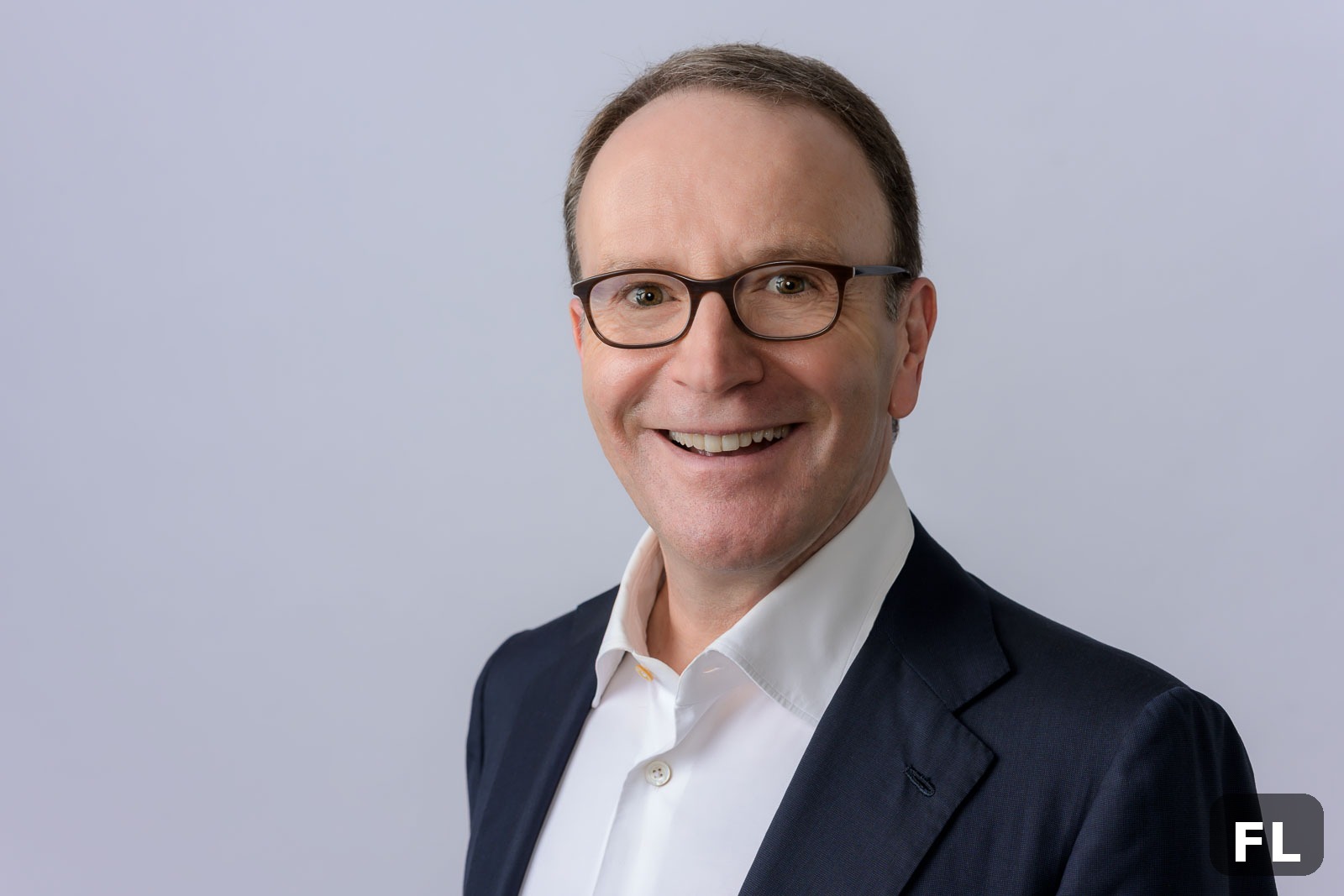
One of them made the most famous trade in hedge-fund history. The other was the first outsider in almost a century trusted to run the world’s biggest food company. John Paulson and Ulf Mark Schneider arrived at the top by opposite routes — Paulson by betting his own capital against the US housing market, Schneider by climbing, company by company, as a professional chief executive.
That difference explains everything about their money. Paulson is a Forbes-listed billionaire whose fortune was made in a handful of extraordinary years. Schneider is a wealthy former CEO whose personal net worth has never been published by a major wealth index, despite eight years running Nestlé.
This comparison traces both careers in full: Paulson’s “greatest trade ever,” Schneider’s transformation of Fresenius and Nestlé, what each man is verifiably worth, and where both stand now.
| Field | John Paulson | Ulf Mark Schneider |
|---|---|---|
| Full name | John Alfred Paulson | Ulf Mark Schneider |
| Best known as | Founder of Paulson & Co. | Former CEO of Nestlé and Fresenius |
| Company | Paulson & Co., New York | Nestlé (2017–2024); Fresenius before that |
| Born | 14 December 1955, New York City, United States | 9 September 1965, Neuwied, West Germany |
| Education | New York University, 1978; Harvard Business School MBA, 1980 | Doctorate in economics, University of St. Gallen; Harvard Business School MBA |
| Defining moment | Bet against US subprime mortgages, 2007 | First external Nestlé CEO since 1922, appointed 2017 |
| Estimated net worth | About $3.8 billion (Forbes, August 2025) | Not published by Forbes or Bloomberg; a verified personal figure has not been made public |
| Main source of wealth | Hedge-fund profits, especially 2007 and 2010 | Executive compensation and share awards as a career CEO |
| Source | Forbes | Nestlé and Fresenius reporting; no major wealth index listing |
Who Is John Paulson?
John Alfred Paulson was born on 14 December 1955 in Queens, New York City, the third of four children. His father, Alfredo Guillermo Paulsen, was born in Ecuador, orphaned at fifteen, and emigrated to Los Angeles at sixteen before serving in the US Army in the Second World War and changing the family name from Paulsen to Paulson. His mother, Jacqueline, was the daughter of Jewish immigrants from Lithuania and Romania.
Paulson’s academic record is formidable. After an early false start in college, he returned to New York University in 1976, graduated valedictorian of his class in finance in 1978, and then earned an MBA from Harvard Business School in 1980 as a George F. Baker Scholar, placing in the top five percent of his class.
He started at Boston Consulting Group, moved to Odyssey Partners, then to Bear Stearns in mergers and acquisitions, and then to Gruss Partners as a general partner. In 1994 he founded Paulson & Co. with $2 million and one employee, working out of office space rented from Bear Stearns. By 2003 the fund managed about $300 million — successful, but still obscure by Wall Street standards.
Who Is Ulf Mark Schneider?
Ulf Mark Schneider was born on 9 September 1965 in Neuwied, Germany, and holds both German and American citizenship, having become a US citizen in 2003. He earned a doctorate in economics from the University of St. Gallen in Switzerland and, like Paulson, an MBA from Harvard Business School.
Schneider built his reputation in healthcare. As chief executive of Fresenius, the German healthcare group, he spent more than a decade expanding the business through acquisitions and turning it into a far larger, more international company. That record made him attractive to a very different kind of company: a food giant looking outside its own walls for the first time in generations.
In January 2017 Schneider became chief executive of Nestlé, the maker of KitKat, Nespresso, Maggi and Purina. He was the company’s first external chief executive since 1922 — a striking break with a century of promoting from within. He is married to Anne van Aaken, a legal scholar, and has one child. The family has kept its private life largely out of public view.
The Trade That Made Paulson a Billionaire
Paulson’s fortune rests on a single insight, executed at enormous scale. In the mid-2000s he concluded that US house prices and subprime mortgage securities were dangerously overvalued. Using credit default swaps — effectively insurance contracts against mortgage defaults — he bet against the housing market while most of Wall Street was still profiting from it.
When the subprime market collapsed in 2007, the bet paid off on a scale rarely seen. Paulson personally earned almost $4 billion that year, and his firm made far more. Gregory Zuckerman’s account of the episode was titled, without much exaggeration, The Greatest Trade Ever. An obscure money manager had become a financial legend in a single year.
He did it again, differently, in 2010, earning about $4.9 billion in a year driven largely by bets on gold and the recovery. Those two years account for the core of his wealth. Later years were rougher: in 2011 his flagship Advantage fund fell sharply after losing investments in Bank of America, Citigroup and Sino-Forest. Forbes estimated his net worth at $3.8 billion in August 2025 — well below his peak, a reminder that even legendary fortunes shrink when the trades stop working.
Paulson has also given away sums most executives never earn. He donated $100 million to the Central Park Conservancy in 2012, then the largest gift in New York City parks history, and $400 million to Harvard in 2015 to endow its engineering school, which now bears his name — the largest gift in Harvard’s history at the time. More recently, coverage on Flasher Magazine of billionaire philanthropy underlines how central those gifts are to his public legacy alongside the trade itself.
How Schneider Built His Wealth Running Other People’s Companies
Schneider never had a “greatest trade.” His income followed the classic chief-executive pattern: salary, annual bonuses, long-term share awards and pension arrangements, first at Fresenius and then at Nestlé, where CEO pay at a Swiss-listed giant sits in the multi-million-franc range each year.
At Nestlé he used that mandate aggressively. He reshaped the portfolio toward what he called high-growth categories — coffee, pet care and nutritional health — struck deals including the Starbucks retail coffee alliance, and divested slower businesses. Investors initially rewarded the clarity, and Nestlé’s shares performed strongly in the first part of his tenure, which in turn supported the value of his share-based pay.
Precise claims about Schneider’s personal fortune, however, need caution. He appears on no Forbes or Bloomberg billionaire list, and no major wealth tracker publishes a verified figure for him. Numbers circulating on biography-aggregator sites have not been confirmed by Nestlé filings as a personal net-worth total. The honest summary is this: after roughly two decades as a top-tier CEO he is unquestionably a wealthy man, but his exact net worth has not been made public in a verifiable form.
John Paulson and Ulf Mark Schneider: The Comparison
The headline comparison is therefore asymmetrical. On one side sits a documented $3.8 billion Forbes estimate, built from market profits that Paulson captured personally because he owned his firm and shared directly in its gains. On the other side sits a career of executive earnings at Fresenius and Nestlé — generous, but paid as compensation, taxed as income, and only partly held in shares of companies he did not control.
Their risk profiles were opposite as well. Paulson’s wealth could, and did, fall by billions when his funds lost money, because it was invested capital. Schneider’s earnings were far steadier and far less volatile, but they had a ceiling set each year by a remuneration committee. Paulson answered mainly to his investors and himself. Schneider answered to a board, and in the end that board relationship decided his exit.
What they share is the Harvard MBA, a reputation for analytical intensity, and careers defined by one big call: Paulson’s was to short housing; Schneider’s was to accept — and then deliver — an outsider’s transformation mandate at a company that almost never hired outsiders.
Where They Are Now
Paulson still leads Paulson & Co., which in later years converted toward managing mainly his own money as a family-office-style operation. He remains a prominent political donor and fundraiser in Republican circles, was discussed as a possible Treasury secretary after the 2024 US election before withdrawing his name citing complex financial obligations, and continues to make large philanthropic commitments, including major support for universities in the United States and Israel reported in 2025 and 2026.
Schneider’s Nestlé tenure ended sooner than expected. After a period of underperformance, a cut to full-year sales guidance in July 2024 and a falling share price, Nestlé announced on 22 August 2024 that he would step down. Company veteran Laurent Freixe took over on 1 September 2024. Nestlé said Schneider had decided to relinquish his roles as CEO and board member after eight years.
His career did not end there. Siemens subsequently nominated Schneider to its supervisory board, with reporting that he was being lined up for a future chair role — a familiar second act for a former DAX and SMI chief executive, moving from running companies to overseeing them.
Bottom Line
John Paulson and Ulf Mark Schneider show two ends of the hired-versus-owner spectrum inside the same comparison. Paulson owned the vehicle that made the money, took the market risk personally, and came away with a Forbes-verified $3.8 billion fortune, even after giving hundreds of millions away.
Schneider owned almost none of the value he created at Fresenius and Nestlé. He was paid exceptionally well to create it for shareholders instead, and he leaves the stage with reputation, board prospects and substantial — but publicly unquantified — personal wealth. If Paulson’s story asks what one perfect trade is worth, Schneider’s asks a quieter question: what is it worth to be trusted, twice, with somebody else’s empire? The answer, in both cases, is a great deal — just not the same kind of deal.
Frequently Asked Questions
Who is richer, John Paulson or Ulf Mark Schneider?
John Paulson, clearly. Forbes estimated his net worth at about $3.8 billion in August 2025. Ulf Mark Schneider has no Forbes or Bloomberg listing, and a verified figure for his personal net worth has not been made public; his wealth comes from CEO compensation at Fresenius and Nestlé.
How did John Paulson make his billions?
By betting against the US subprime mortgage market in 2007 using credit default swaps. He personally earned almost $4 billion that year, and about $4.9 billion in 2010, largely on gold-related positions. He founded his firm, Paulson & Co., in 1994.
Why did Ulf Mark Schneider leave Nestlé?
Nestlé announced in August 2024 that he would step down after eight years, following a period of underperformance, a cut to sales guidance in July 2024 and sustained share-price weakness. Laurent Freixe succeeded him on 1 September 2024.
What did Schneider do before Nestlé?
He was chief executive of Fresenius, the German healthcare group, where he built his reputation through acquisitions and international expansion. His success there led Nestlé to hire him in 2017 as its first external CEO since 1922.
Are John Paulson and Ulf Mark Schneider connected?
No direct business or personal connection is known. They are compared because both are Harvard MBAs who reached the top of global business — one as an owner-investor, the other as a professional chief executive — with very different financial outcomes.
What is Ulf Mark Schneider doing now?
After leaving Nestlé in 2024, he was nominated to the supervisory board of Siemens, with reporting that he is being prepared for a future chair role. He has not taken another chief-executive position.