

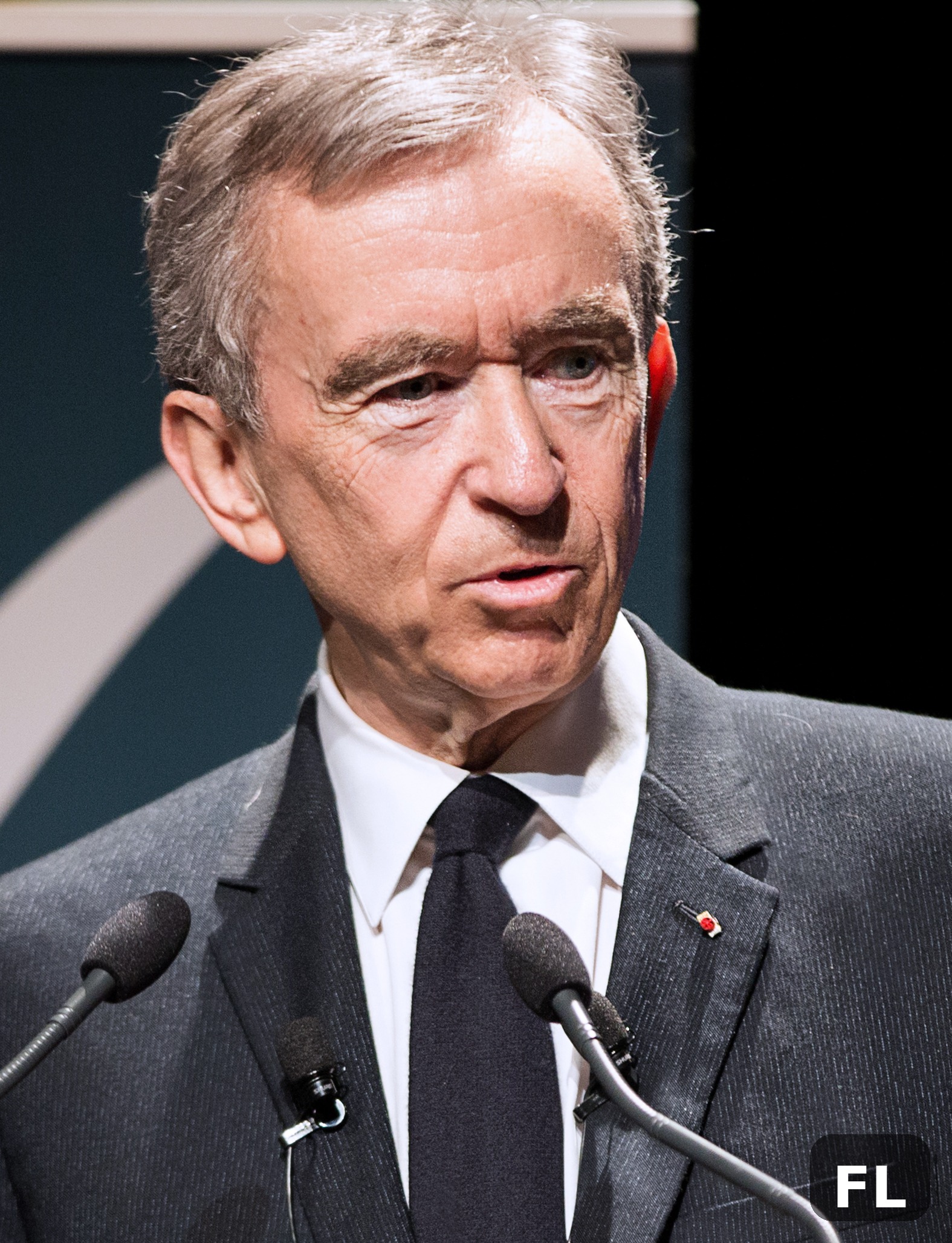
One man turned a bankrupt French textile group into the world’s largest luxury empire. The other spent 35 years inside a single car company, rising from trainee engineer to the top job. Put Bernard Arnault and Oliver Zipse side by side and you get one of the clearest lessons in modern business: running a giant company and owning a giant company are two very different roads to wealth.
Arnault, chairman and chief executive of LVMH, has at times been the richest person on the planet. Zipse, who led BMW until May 2026, was one of Europe’s most respected industrial bosses — highly paid, hugely influential, and in charge of billions of euros in investment, yet never a billionaire in his own right.
This comparison looks at who each man is, how their careers unfolded, how each fortune — large and comparatively modest — was actually built, and where both men stand in 2026. The gap between them is not a gap in talent. It is a gap in ownership.
| Field | Bernard Arnault | Oliver Zipse |
|---|---|---|
| Full name | Bernard Jean Étienne Arnault | Oliver Zipse |
| Best known as | Chairman and CEO, LVMH | Former Chairman of the Board of Management (CEO), BMW AG |
| Company | LVMH Moët Hennessy Louis Vuitton | BMW Group (BMW, MINI, Rolls-Royce) |
| Born | 5 March 1949, Roubaix, France | 7 February 1964, Heidelberg, West Germany |
| Education | École Polytechnique, graduated 1971 | Mechanical engineering, TU Darmstadt, 1991; Executive MBA, Kellogg-WHU, 1999 |
| Time in top job | LVMH chairman from January 1989 | BMW chairman from 16 August 2019 to May 2026 |
| Estimated net worth | About $190.4 billion (Forbes, December 2025); about $203 billion (Bloomberg Billionaires Index) | No verified Forbes or Bloomberg figure has been published; secondary estimates vary widely and should be treated as unverified |
| Main source of wealth | Family ownership stake in LVMH, held through Christian Dior SE and family holdings | Executive salary, bonuses and share-based pay over a 35-year BMW career |
| Source | Forbes / Bloomberg Billionaires Index | BMW Group reports and press releases; no major wealth index listing |
Who Is Bernard Arnault?
Bernard Arnault was born in Roubaix, an industrial town in northern France, on 5 March 1949. His father, Jean Léon Arnault, owned the civil engineering firm Ferret-Savinel. His mother, Marie-Josèphe Savinel, was a pianist who, by family accounts often repeated in profiles, had a fascination for Dior — a small detail that reads like foreshadowing.
Raised in a strict Catholic household, Arnault studied civil engineering and mathematics at École Polytechnique, one of France’s most demanding grandes écoles, graduating in 1971. He went straight into the family firm. Within a few years he had persuaded his father to sell the industrial construction side and focus on real estate, and from 1978 to 1984 he was the company’s president.
That engineering training matters to the story. Arnault has never presented himself primarily as a fashion man. He approaches luxury houses the way an engineer approaches a structure: find the load-bearing brand, remove what does not work, and build patiently on what remains.
Who Is Oliver Zipse?
Oliver Zipse was born on 7 February 1964 in Heidelberg. Where Arnault moved between companies and deals, Zipse did the opposite: he spent his entire professional life at BMW. He studied mechanical engineering at the Technische Universität Darmstadt, graduating in 1991, and joined BMW that same year as a trainee in development, technical planning and production.
He added an Executive MBA from the Kellogg-WHU programme in 1999, but his reputation was built on factory floors rather than in classrooms. He held leadership roles in development, production and production planning in Munich and South Africa, ran the MINI plant in Oxford from 2007 to 2008, and then led technical planning and group production strategy.
In May 2015 he joined BMW’s board of management with responsibility for production. Reports at the time credited the production network he expanded in Hungary, China and the United States with helping BMW deliver strong margins for a company of its size. When Harald Krüger stepped aside, Zipse became chairman of the board on 16 August 2019.
How Arnault Built the LVMH Empire
Arnault’s defining move came in 1984. The French government was looking for someone to take over Boussac Saint-Frères, a bankrupt textile and retail group that happened to own Christian Dior. With backing arranged through Lazard, Arnault bought the group for a ceremonial one franc.
What followed earned him the nickname “The Terminator.” He laid off about 9,000 workers in two years, sold almost everything, and kept the two assets he actually wanted: Christian Dior and the Le Bon Marché department store. By 1987 the business was profitable again.
In 1987 Louis Vuitton merged with Moët Hennessy to form LVMH. Arnault manoeuvred through the new group’s internal power struggle, spent heavily to build his stake, and in January 1989 was elected chairman. He has run the group ever since — a tenure of more than three and a half decades at the top of one company.
From there the method repeated for decades: acquire a heritage brand, keep its identity fiercely separate, install strong creative and commercial leadership, and let the group supply scale behind the scenes. Céline, Berluti, Kenzo, Guerlain, Loewe, Marc Jacobs, Sephora, Fendi and Bulgari all joined along the way. The largest deal, Tiffany & Co., was completed in January 2021 for nearly $16 billion after a bruising renegotiation during the pandemic.
Readers who follow luxury business coverage on Flasher Magazine will know the result: LVMH reported revenue of €84.7 billion in 2024 and became the largest company by market capitalisation in the eurozone. Arnault’s five children — Delphine, Antoine, Alexandre, Frédéric and Jean — all hold senior roles in the group, with Delphine becoming chief executive of Christian Dior in February 2023.
How Zipse Built His Career — and His Income
Zipse never owned the factory. He ran it, superbly, and was paid as a top European executive rather than as a founder. BMW disclosed board pay in its annual reports, and his total compensation as chairman was reported in the range of several million euros a year — around $5.7 million in 2021 in widely cited figures, with later years in a similar multi-million range depending on performance components.
Over 35 years, that kind of pay, plus share-based awards and pension entitlements, can build a comfortable fortune in the tens of millions. It cannot, on its own, build a billion-dollar one. That is why there is no Forbes or Bloomberg billionaire listing for Zipse, and why precise net-worth figures published on low-quality celebrity-wealth sites should not be treated as verified. His personal net worth has not been confirmed by a major wealth index.
His real legacy is operational. As chairman he steered BMW through the COVID-19 pandemic, semiconductor shortages and the industry’s electric transition. He defended what BMW calls “technology openness” — battery-electric cars alongside plug-in hybrids, efficient combustion engines and longer-term hydrogen work — rather than betting the company on a single drivetrain date.
Above all, his name is attached to the Neue Klasse, the new electric and software-defined vehicle generation BMW describes as the largest strategic project in its history. The first Neue Klasse models reaching customers in 2026 and 2027 will be the commercial test of decisions taken on his watch.
Bernard Arnault and Oliver Zipse: The Comparison
Start with the headline number, because it is stark. Forbes put Arnault and his family at about $190.4 billion in December 2025, with Bloomberg’s index at about $203 billion at a similar point. In April 2023 his fortune passed $200 billion and he was, for a period, the world’s richest person — the first person from outside North America, and still the only consumer-goods mogul, to hold that position in the modern rankings era.
Set against that, Zipse’s wealth is executive wealth: substantial, hard-earned and life-changing by ordinary standards, but several orders of magnitude smaller. The difference is not that one man worked harder or led a bigger company in every respect. BMW is an industrial giant in its own right, and Zipse controlled investment decisions worth billions.
The difference is structure. Arnault combines two roles that are usually separate. He is the chief executive who allocates capital, and, through his family’s holding in Christian Dior SE, the controlling owner who benefits when the value of that capital rises. When LVMH’s share price moves, his family’s estimated fortune can move by billions in a single period. Zipse’s authority, by contrast, came from his office. It ended when his term ended.
There is also a difference in time horizon. Arnault has compounded ownership since 1989 and is now arranging succession inside his own family. Zipse worked to a contract, extended once beyond BMW’s usual retirement age until 2026, and then handed over on schedule. One story is dynastic. The other is institutional.
Where They Are Now
Arnault remains chairman and chief executive of LVMH in 2026, with the question of which of his children ultimately succeeds him still unanswered in public. He dodged that question at the April shareholders’ meeting, even as all five children have taken visible roles across the group. The family’s stake has continued to edge upward, reinforcing that the succession story is about control passing within the family, not away from it.
Zipse’s chapter has closed cleanly. BMW announced in December 2025 that Milan Nedeljković, the board member for production, would succeed him. Zipse left the board after the Annual General Meeting on 13 May 2026, concluding 35 years with the BMW Group, and Nedeljković took over on 14 May 2026 following the successful launch of the Neue Klasse.
Supervisory board chairman Nicolas Peter thanked Zipse for leading BMW through global crises including the pandemic and for representing the Neue Klasse project. It was a planned, orderly exit — very much in keeping with the man’s reputation.
Bottom Line
Bernard Arnault and Oliver Zipse both reached the top of European business, both trained as engineers, and both were known for discipline rather than flamboyance. Almost everything else about their financial lives diverges.
Arnault’s fortune is ownership, compounded over nearly four decades and now measured at roughly $190 billion by Forbes. Zipse’s is a career, rewarded at the top of the executive pay scale and never publicly measured by a major wealth index. Comparing them does not really compare two bank balances. It compares two systems — the owner-operator and the professional manager — and shows, more clearly than almost any other pairing in European business, which one the stock market rewards with dynastic wealth.
Frequently Asked Questions
Who is richer, Bernard Arnault or Oliver Zipse?
Bernard Arnault, by an enormous margin. Forbes estimated Arnault and his family at about $190.4 billion in December 2025. Oliver Zipse has no verified Forbes or Bloomberg net-worth figure; his wealth comes from executive pay over 35 years at BMW and is understood to be in a completely different, far smaller category.
How did Bernard Arnault make his money?
Mainly through ownership, not salary. He bought the Boussac group, owner of Christian Dior, for one franc in 1984, took control of LVMH in 1989, and built it into the world’s largest luxury group through decades of acquisitions including Tiffany & Co. His family holds its stake through Christian Dior SE, so LVMH’s market value drives his fortune.
When did Oliver Zipse leave BMW?
He left the Board of Management after BMW’s Annual General Meeting on 13 May 2026, after 35 years with the company. Milan Nedeljković succeeded him as chairman on 14 May 2026.
What was Oliver Zipse’s main achievement at BMW?
Leading BMW through the pandemic and supply-chain crises while launching the Neue Klasse, the electric and software-defined vehicle generation BMW calls the largest strategic project in its history. He also championed “technology openness” across electric, hybrid, combustion and hydrogen power.
Are Bernard Arnault and Oliver Zipse connected?
There is no known direct business partnership or personal relationship between them. They are paired in searches because both led flagship European groups — LVMH in luxury and BMW in premium cars — and because the contrast between an owner-chairman’s fortune and a salaried chairman’s pay is so instructive.
Who will succeed Bernard Arnault at LVMH?
No successor has been publicly named. All five of his children hold senior roles in LVMH brands, including Delphine Arnault as chief executive of Dior, but Arnault has not announced which, if any, will take the top job.